I spent two years in a basement studio pinning hems for a bridal shop, and if there is one thing I learned, it’s that most “wardrobe organization” advice is a total scam. You don’t need a minimalist capsule collection or a brand-new linen set to feel put together; you just need to stop treating your closet like a graveyard of bad decisions. Most people think learning how to audit a wardrobe means deciding what to throw away, but that’s just a fancy way of saying you’re preparing to spend more money. In reality, an audit isn’t about subtraction—it’s about identifying the math of what you actually have versus what you actually wear.
I’m not here to sell you on a lifestyle aesthetic or a new way to shop. I’m going to show you how to look at your clothes through the eyes of a tailor, focusing on fabric integrity, seam allowances, and those tiny, fixable fit issues that are currently making you avoid your favorite pieces. We are going to figure out which items are worth a £15 trip to the alterations shop and which ones are just taking up space. This is a practical, no-nonsense blueprint for making the clothes you already own work for your actual life.
Stop Buying Your Way Out How to Audit a Wardrobe Mathematically

We need to stop treating “newness” like a cure for a bad outfit. Most people approach a wardrobe refresh by scrolling through apps, but that’s just expensive procrastination. Instead, I want you to look at your clothes through the lens of cost-per-wear and structural integrity. Grab a notebook and start a tally. For every piece you actually love, ask yourself: Does this fit my current body, and can a tailor fix the parts it can’t? If a jacket has a beautiful wool blend but the sleeves are two inches too long, that’s not a reason to bin it—it’s a £15 alteration away from being a staple.
When you’re organizing closet space, don’t just move things around. Categorize by fabric weight and utility. If you have ten polyester shirts that pill after three washes, they aren’t capsule wardrobe essentials; they are clutter. Real sustainable fashion habits aren’t about buying organic cotton basics; they are about keeping the high-quality heavyweights you already own in rotation. If the math doesn’t add up—if you’re spending more on “fixes” than the garment is worth—then it’s time to let it go.
The Fabric Test Sorting Capsule Wardrobe Essentials From Disposable Trash
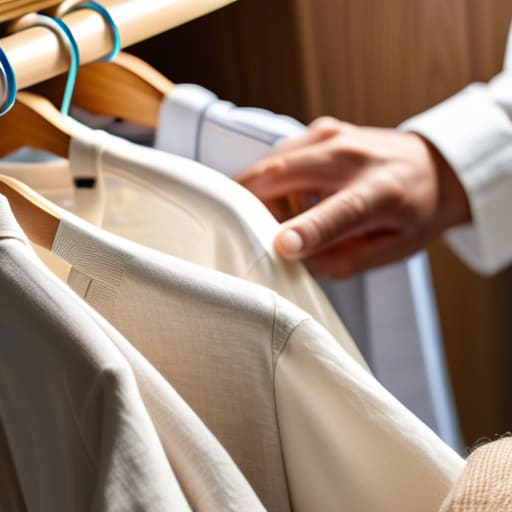
Once you’ve stripped your closet down to the basics, stop looking at the brand name and start looking at the fiber content on that tiny, itchy care label. This is where most people fail at minimalist wardrobe planning. You might think you’re building a collection of capsule wardrobe essentials, but if your “staple” white T-shirt is 100% thin, reactive polyester, it’s not a staple—it’s a ticking time bomb of pilling and warping. I want to see natural fibers with some heft: cotton, linen, wool, or silk. These are the materials that actually hold a shape after a wash and, more importantly, can survive a trip to the tailor if the hem needs a tweak.
If a garment feels suspiciously lightweight or has that weird, plastic-y sheen, it’s disposable trash. It doesn’t matter how much you paid; if the fabric can’t support its own weight, it will never look “expensive,” no matter how you style it. When you’re sorting through your piles, don’t just think about decluttering clothing tips; think about durability math. If a £10 synthetic top loses its shape in three washes, you’ve actually spent more per wear than if you’d bought one solid wool jumper. If it’s trash, don’t let it take up space—get it out of your sight.
Sustainable Fashion Habits Why Your Decluttering Clothing Tips Are Failing
The reason most decluttering clothing tips feel like a chore is that they focus on what to throw away rather than what to keep. You’ve probably been told to purge everything that doesn’t spark joy, which is fine if you have a limitless budget to replace it all, but for the rest of us, that’s just a recipe for more landfill waste. Real sustainable fashion habits aren’t about owning less; they are about owning things that actually work. If you’re tossing a skirt just because it’s a bit too loose at the waist, you aren’t being a minimalist—you’re just being wasteful.
Instead of a mass purge, I want you to look at the “why” behind the clutter. Most people struggle with minimalist wardrobe planning because they try to build a collection of “perfect” items that don’t actually exist in their real lives. You don’t need a hundred pieces; you need ten pieces that fit your body and your Tuesday-to-Friday schedule. If a garment is high-quality but the fit is off, don’t bin it. A twenty-pound hem adjustment is a much better investment than a new fifty-pound polyester blend.
Minimalist Wardrobe Planning Evaluating Cost Per Wear Not Retail Price
We need to stop talking about “investment pieces” like they’re some magical, holy grail of fashion. A £300 silk blouse is not an investment if it sits in your closet for two years because the armholes are too tight and you’re too embarrassed to pay the £40 to fix them. Real minimalist wardrobe planning isn’t about the sticker price; it’s about the math of the wear. If you buy a high-quality wool blazer for £200 and wear it twice a week for three years, your cost per wear is pennies. If you buy a “bargain” polyester top for £15 that loses its shape after three washes, you’ve actually wasted your money.
When you are looking at your capsule wardrobe essentials, ask yourself: does this garment actually earn its keep? I want you to look at the seams, not the brand name. If a piece is structurally sound but just sits weirdly on your hips, factor in the alteration cost immediately. If the math doesn’t work—if the price of the item plus the fix exceeds the value of how much you’ll actually use it—put it back. Don’t let a “good deal” trick you into cluttering your life with expensive mistakes.
Beyond the Bin Ethical Clothing Donation Ideas and Organizing Closet Space
Once you’ve finished the math and realized what’s actually worth keeping, you’re left with the “everything else” pile. Please, for the love of all things textile, do not just dump it in a charity bin at the supermarket. Most of those bins are essentially landfills with a different zip code. If a garment is structurally sound but just doesn’t fit your current life, look for local textile recycling programs or specific organizations that repurpose fabric for upholstery or insulation. If it’s actually decent—just a bit dated or a size off—look for community swap meets. Giving a jacket a second life through a peer-to-peer swap is a much more effective sustainable fashion habit than letting it sit in a dark warehouse.
When it comes to organizing closet space, stop trying to force a lifetime of “maybe one day” clothes into a tiny wardrobe. If you’re building a collection of capsule wardrobe essentials, your closet should breathe. Use slim, non-slip hangers to save physical room, but more importantly, use visual space to your advantage. If you can’t see the seam or the fabric texture because everything is crammed together, you won’t wear it. A tidy closet isn’t about aesthetics; it’s about making sure you can actually see the tools you have to get dressed on a Tuesday morning.
The "Don't Toss It Yet" Checklist: 5 Ways to Salvage Your Closet
- The Seam Allowance Audit: Before you bin a pair of trousers because the hem is frayed or the waist is a fraction too tight, check the inside. If there’s enough seam allowance—that extra bit of fabric inside the stitch—a tailor can let them out for about £15. That’s a lot cheaper than buying new trousers that actually fit your hips.
- The “Wednesday Test” for Versatility: Pick up a garment and ask yourself: “Can I wear this on a random, boring Wednesday without feeling like I’m in a costume?” If it only works with three specific, high-maintenance accessories, it’s not a wardrobe staple; it’s a liability taking up precious hanger space.
- Weight and Drape Assessment: Hold your clothes up. If a knit feels suspiciously light or “crunchy,” it’s likely a high-percentage synthetic blend that will pill and lose its shape after three washes. These aren’t essentials; they are temporary. Real staples have weight and a predictable drape.
- The Hardware Check: Look at the zippers, buttons, and snaps. A beautiful silk blouse is useless if the zipper is stuck or the buttons are loose. Instead of decluttering it, factor in a £10 fix. A quick trip to a local dry cleaner with a sewing machine can turn “trash” back into a “favorite.”
- The “Body Neutral” Reality Check: Stop keeping clothes that you are “waiting” to fit into. It’s a psychological trap that makes your current, functional clothes feel inadequate. If it doesn’t fit your body as it exists today, it’s not a wardrobe item; it’s a source of guilt. Donate it or sell it, and focus on what actually works right now.
The Math of a Closet
An audit isn’t about deciding what you don’t like; it’s about calculating the gap between what you own and what actually works on your body. If you have twenty shirts but only three fit your shoulders correctly, you don’t have a wardrobe—you have a collection of expensive fabric scraps that are just wasting your time and your floor space.
Neve Okonkwo-Barr
The Math of a Real Wardrobe
At the end of the day, auditing your wardrobe isn’t about achieving some aesthetic, Pinterest-perfect minimalism that requires a massive credit card bill to maintain. It’s about looking at what you actually own and being honest about it. We’ve looked at the math: if a garment has a high cost-per-wear but a terrible fit, it’s not a lost cause—it’s just a £15 hem away from being your favorite item. We’ve looked at the fabric: if it’s pilling or thinning after three washes, it’s trash, not a “staple.” And we’ve looked at the ethics: donating to a textile landfill isn’t sustainability; it’s just passing the problem down the line. Stop treating your closet like a graveyard of bad decisions and start seeing it as a collection of raw materials that just need a little bit of technical attention.
My goal isn’t to make you buy a new “capsule” of expensive linen trousers. My goal is to make sure that when you wake up on a rainy Tuesday, you aren’t staring at a full closet feeling like you have nothing to wear. Style isn’t a shopping problem; it is a relationship between your body, your budget, and the way a seam sits on your shoulder. When you stop chasing the trend and start respecting the construction and the fit, you stop being a consumer and start being someone who actually knows how to dress. You don’t need more clothes; you just need the right ones to work for you.
Frequently Asked Questions
I found a high-quality wool blazer, but the shoulders are too wide; is it actually worth paying a tailor to fix, or is the structural cost too high?
The short answer? Usually, no. Shoulders are the structural skeleton of a blazer. To fix them, a tailor has to deconstruct the entire sleeve head and shoulder pad, which is high-level surgery. You’re looking at £50–£80 minimum, and if the fabric is thin, it’ll never look right. Unless that blazer is 100% heavy wool and the price was a steal, walk away. Don’t spend more on the fix than the garment is worth.
How do I tell if a "natural" fabric like cotton or linen is actually going to hold its shape after five washes, or if it's just cheaply woven?
Don’t just look at the label; look at the weave. Hold the fabric up to the light—if you see uneven gaps or “slubs” that look like mistakes rather than texture, it’s going to warp. Give it a firm tug; if it doesn’t snap back immediately, it’s lost the battle already. Cheap cotton is often beaten thin to save money, meaning it’ll pill and sag by wash three. If it feels flimsy now, it’s trash later.
If I’m trying to calculate cost-per-wear, should I be counting the money I spent on alterations as part of the garment's total price?
Yes. Absolutely. If you buy a £40 pair of trousers but spend £25 getting the hem and waist taken in so they actually stay up and look good, that garment cost you £65. If you don’t include the alteration cost, your math is a lie. You aren’t calculating the cost of the item; you’re calculating the cost of the outfit. If the math doesn’t work with the tailor’s fee included, it’s not an investment—it’s a hobby.
