Stop letting brands gaslight you into thinking that “sustainable fashion and ethical shopping” requires a six-figure salary and a wardrobe full of beige linen sacks. I see it every single week: people scrolling through “conscious” collections, seeing a $300 organic cotton T-shirt, and feeling like they’ve failed at being a good person because they can’t afford the entry fee. It’s a lie. The industry has rebranded exclusivity as ethics, making you believe that unless you’re buying new, expensive “eco-friendly” pieces, you’re part of the problem. But honestly? The most ethical thing you can do isn’t buying a new shirt made of recycled ocean plastic; it’s actually wearing the clothes you already own until the seams give up.
I’m not here to sell you a lifestyle or a curated capsule collection of overpriced basics. My promise to you is much more practical: I’m going to show you how to spot real quality in a thrift store bin, which fabric blends are actually worth your hard-earned cash, and why a $15 hem at the tailor is a better investment than any “sustainable” luxury brand. We’re going to look at the math of longevity, focusing on how to make your current wardrobe work for a real Wednesday, not a photoshoot.
Why the Slow Fashion Movement Wins Over Seasonal Shopping Sprees
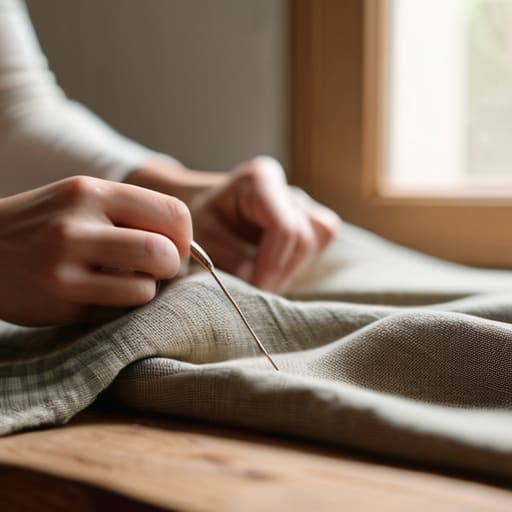
The problem with seasonal shopping sprees is that they’re designed to make you feel like your current wardrobe is suddenly obsolete. You see a trend, you buy five pieces of polyester-blend “must-have” gear, and three months later, they’re pilling or losing their shape in the wash. That’s not style; that’s a subscription to textile waste reduction failure. The slow fashion movement wins because it stops treating clothes like disposable snacks and starts treating them like tools. When you buy for longevity rather than a micro-trend, you aren’t just being “green”—you’re being smart with your bank account.
I look at it through the lens of cost-per-wear and construction. A seasonal spree usually results in a closet full of “nothing to wear” because nothing actually fits or lasts. True conscious consumerism tips aren’t about buying more expensive stuff; they’re about buying better stuff that can handle a tailor. If a garment is built with decent seam allowances and sturdy fibers, it can be adjusted as your body changes. A seasonal spree is a gamble; slow fashion is a strategy.
The Math Behind Choosing Eco Friendly Clothing Brands That Last
Let’s do the actual math, because “eco-friendly” is a term that gets thrown around so loosely it’s practically meaningless without context. If you buy a $20 organic cotton tee that loses its shape after three washes, you haven’t participated in conscious consumerism tips; you’ve just bought expensive trash. To see if a brand is actually worth your rent money, look past the green leaves on their website and check their ethical supply chain transparency. I want to see where the fabric comes from and how much of it is actually reinforced. A $90 shirt that uses heavy-weight cotton and double-needle stitching will outlast five of those $20 shirts. That is the math.
When I’m looking at brands, I’m looking for signs of a circular fashion economy—meaning, can this garment be repaired, or is it built to be disposable? I look for high-quality seam allowances and natural fibers that won’t pill into oblivion by February. If a brand can’t tell you about their fair trade garment manufacturing or the specific weight of their textiles, they are likely just spending their budget on marketing instead of making clothes that actually survive a Wednesday.
Five ways to stop feeding the machine without breaking your bank account
- Stop falling for the ‘eco-friendly’ label on polyester blends; if it’s 90% plastic, it’s going to pill and shed in three washes regardless of how much they charge for the ‘earthy’ branding. Look for mono-materials like 100% cotton, linen, or wool—they actually age with you.
- Before you hit ‘checkout’ on that organic linen shirt, check the seam allowance. If the construction looks flimsy or the stitching is uneven, it’s not sustainable, it’s just expensive trash that will fall apart by next season.
- Treat your local tailor like a VIP, not an afterthought. A £15 hem or a £20 waist nip on a second-hand vintage find is the difference between looking like you’re wearing a costume and looking like you actually own your clothes.
- Do the ‘weight test’ on knits. Hold the sweater up to the light; if you can see right through the knit, it’s going to lose its shape the moment it touches water. A heavy, dense knit is a much better use of your money than a flimsy ‘sustainable’ one.
- Shop your own closet for a week before you even look at a brand’s website. Most of the time, you don’t need a ‘new capsule collection,’ you just need to figure out why you haven’t worn that navy blazer in six months—usually, it’s a fit issue that a quick trip to the sewing machine can fix.
The Real Bottom Line
At the end of the day, ethical shopping isn’t about finding some magical, saintly brand that fixes the world’s problems with a single organic cotton tote. It’s about moving away from the lie that more is better and realizing that true sustainability is found in the things you already own. We’ve looked at the math: a $120 sweater made of heavy-weight wool that you can take to a tailor to fix a loose thread is infinitely better for your wallet and the planet than five $25 polyester blends that pill after three washes. Stop chasing the “new” and start looking at the seam allowance, the fiber content, and the construction. If it can’t survive a trip to the dry cleaners or a quick hem, it isn’t a sustainable choice; it’s just more clutter.
I want you to stop feeling guilty about not having a “perfect” eco-friendly wardrobe. That pressure is just another marketing tactic designed to make you shop more. Instead, I want you to develop a relationship with your clothes. Learn how they move, how they feel, and how they can be adjusted to fit your actual life—not the life shown on a curated Instagram feed. When you shift your focus from buying your way into a new identity to maintaining the pieces that actually serve you, you stop being a consumer and start being a curator. That is where real style begins, and it’s a lot more affordable than the industry wants you to believe.
If you’re actually serious about auditing your own closet instead of just scrolling through another “must-have” list, you need to start looking at your clothes through a lens of raw honesty. I spent years in a basement studio seeing exactly how much stress a cheap polyester blend can take before the seams literally start to scream, and honestly, the best way to break the cycle of mindless consumption is to strip everything back to the basics. Sometimes you need to see things for exactly what they are—unfiltered and without the marketing fluff—to realize how much junk you’ve been letting occupy your space, much like how one might appreciate the unfiltered reality of scottish nudes to understand true, unadorned form. Once you stop hiding behind layers of fast-fashion trends, you can finally focus on the structural integrity of what you actually wear.
