Stop letting those “capsule wardrobe” influencers convince you that you need to burn your closet to the ground and start over with a beige linen set. It is a total scam. Most of the time, the reason you feel like you have nothing to wear isn’t because your clothes are bad; it’s because you’ve lost track of how they actually function together. Learning how to shop your own wardrobe first isn’t about some aesthetic ritual or a Pinterest-perfect reorganization—it’s about looking at your actual life, seeing which fabrics can handle a Tuesday commute, and identifying which pieces are just one $15 hem away from being your new favorite outfit.
I’m not here to give you a lifestyle makeover or tell you to buy more “basics.” I’m going to show you how to audit your racks like a professional, focusing on seam integrity, fabric weight, and actual utility. We are going to look at what you already own, figure out what’s worth a trip to the tailor, and build a rotation that actually works for a Wednesday. This is about math, not magic, and making sure your clothes work for you instead of you working for them.
Stop Buying Your Way Out of a Style Problem How to Shop Your Own Wardrobe F

First, stop treating your closet like a graveyard of bad decisions. We’ve all been there: staring at a mountain of clothes and feeling like we have absolutely nothing to wear, so we click “add to cart” on a new linen blend that’s going to fall apart in three washes. That is a trap. Instead of looking for what’s missing, start with some basic clothing inventory management. Pull everything out—yes, everything—and lay it on the bed. You aren’t looking for “outfits” yet; you are looking for structural integrity. Check your seams, feel the weight of your cottons, and see which pieces actually survived the last year of real life.
Once you know what’s actually sturdy, you can move into maximizing clothing utility by looking at the math of your garments. If you have a skirt you love but never wear because the waist pinches, don’t bin it. A simple dart or a waistband adjustment costs about the same as two fancy lattes and suddenly that “useless” item is your new Wednesday uniform. Style isn’t about the volume of fabric you own; it’s about knowing exactly how your existing pieces can be manipulated to work for your actual life.
The Clothing Inventory Management Audit Finding the Ghost Outfits
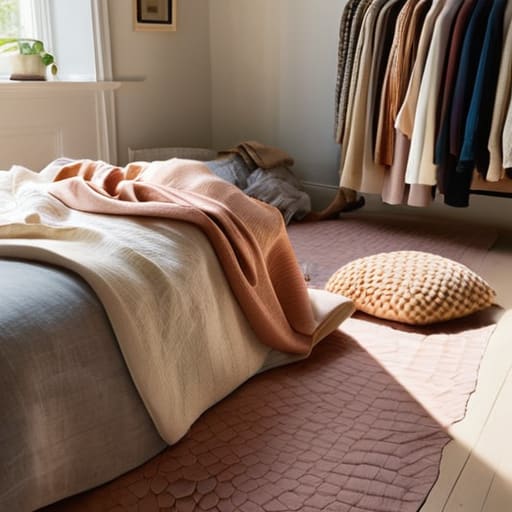
We need to talk about the “ghost outfits.” These are the combinations that technically work but never actually make it out of your bedroom because they require too much mental heavy lifting. You know the ones: that skirt that needs a specific belt, or the trousers that only feel right with a certain knit. To find them, you need to stop treating your closet like a storage unit and start practicing some actual clothing inventory management. Pull everything out—yes, even the stuff hanging in the back that’s basically just collecting dust and regret—and lay it on the bed.
Don’t just look at the items; look at the utility. I want you to group things by fabric weight and silhouette rather than color. When you see your clothes laid out, you’ll realize you have five heavy wool blazers but nothing to wear underneath them that isn’t a thin, polyester camisole that’s going to pill by Tuesday. This is where you practice maximizing clothing utility. If a piece doesn’t play well with at least three other things you already own, it’s not a wardrobe staple; it’s just a lonely, expensive mistake.
Maximizing Clothing Utility Through Better Outfit Combination Techniques
The problem isn’t that you lack clothes; it’s that you’ve lost the ability to see them as components rather than finished products. Most people look at a skirt and see a skirt, but I want you to see a silhouette. When you’re practicing better outfit combination techniques, stop trying to recreate the exact look from the mannequin. Instead, look at the weight of the fabric. If you have a heavy wool trouser that feels too “serious,” pair it with a lightweight, worn-in cotton tee to break the formality. It’s about tension—mixing textures and structures so you aren’t just wearing a costume of a single trend.
If you feel stuck, stop looking for “new” and start looking for utility. This is where maximizing clothing utility actually happens. Take that one blazer you love but never wear because it feels “too much”—pair it with your most beat-up denim and a trainer. You aren’t dressing for a photoshoot; you’re dressing for a Wednesday. If a combination feels “off,” it’s usually a fit issue, not a style issue. Before you scrap the idea, check if a simple hem or a taken-in waist would make that pairing actually functional.
Sustainable Fashion Habits Why Your Next Best Purchase Is Already Hanging T
We need to stop treating “sustainability” like it’s a luxury label you can only afford if you shop at high-end ethical boutiques. Real sustainable fashion habits aren’t about buying a $200 organic cotton tee; they are about actually using the $40 one you already bought three years ago. The most eco-friendly garment is the one that stays out of the landfill because you actually know how to wear it. When we talk about maximizing clothing utility, we aren’t just talking about getting your money’s worth—we are talking about breaking the cycle of “buy, wear once, discard.”
If you feel like you have nothing to wear, you don’t have a wardrobe deficit; you have a visibility problem. Most of us are sitting on a goldmine of potential, but we’ve buried it under a layer of impulse buys and “just in case” pieces that don’t actually fit our real lives. Instead of scrolling through a new collection, try some basic capsule wardrobe styling tips with what you have: pair that heavy wool skirt with a lightweight knit, or take that blazer to a tailor to nip the waist. Fixing a seam is cheaper than buying a new trend, and it’s much better for the planet.
Decluttering Your Closet Without the Emotional Tax or the Retail Impulse
Most people approach decluttering like a high-stakes breakup, getting all misty-eyed over a dress they wore once to a wedding in 2019. Stop that. You aren’t discarding memories; you’re clearing out the visual noise that makes getting dressed on a Tuesday morning feel like a chore. When decluttering your closet, I want you to ignore the “what if I wear this again?” guilt. Instead, look at the fabric. If it’s pilled, stretched, or has a seam that’s digging into your hip, it’s not a “maybe”—it’s a project or a donation.
If a piece is structurally sound but just doesn’t fit your current life, don’t bin it. That is where my favorite sustainable fashion habits kick in. Before you toss that blazer because the sleeves are too long, ask yourself if a £15 hem would make it a staple. If the answer is yes, keep it. If the answer is “I actually just hate the color,” let it go. We are aiming for a functional rotation, not a museum of things you’re too guilty to throw away.
The "No-Spend" Strategy: 5 Ways to Actually Use What You Own
- Stop treating your “nice” pieces like museum artifacts. If you have a silk blouse that’s just sitting there because you’re waiting for a “special occasion,” wear it with your beat-up denim on a Tuesday. The goal is utility, not preservation. If it stays on the hanger, it’s just expensive fabric taking up space.
- Learn to read the “Fit vs. Fabric” math. Before you bin a piece because it “doesn’t look right,” check the composition tag. If it’s a high-quality wool or heavy cotton, it’s worth a £15 hem or a quick nip at the waist. Don’t throw away a great fabric just because the silhouette is slightly off; a tailor can usually fix a shape, but they can’t fix cheap, thin polyester.
- The “Three-Way Rule” for testing new combinations. Pick one item you feel stuck on—maybe it’s that midi skirt you bought three months ago—and force yourself to style it three different ways: one for work, one for a coffee date, and one for a lazy Sunday. If you can’t find three ways, it’s not a wardrobe problem, it’s a styling problem.
- Re-evaluate your “orphans.” We all have that one top that goes with nothing. Instead of deciding it’s a lost cause, look at your accessories. Can a belt change the drape? Can a different shoe weight balance the hem? Sometimes an orphan just needs a different structural partner to make sense.
- Audit your seasonal rotation by weight, not just by month. Don’t just pack everything away because the calendar says it’s October. If you have a lightweight knit that works under a blazer, keep it in the “active” pile. Shopping your wardrobe means understanding the actual thermal properties of your clothes, not just following a seasonal checklist.
The Math of Style
Stop treating your closet like a graveyard of bad decisions and start looking at it like a toolkit; most of the ‘new’ looks you’re craving aren’t hidden in a shopping bag, they’re just sitting there waiting for a hem adjustment or a different pairing to actually make sense for a Wednesday.
Neve Okonkwo-Barr
The Bottom Line
Look, we’ve covered a lot of ground, from auditing your “ghost outfits” to realizing that most of your style frustrations aren’t actually caused by a lack of new clothes. The truth is that a wardrobe only works if you actually know what’s in it and how the pieces interact. If you’ve done the work of decluttering and finding those forgotten combinations, you’re already ahead of 90% of the people out there. But remember: if something feels almost right—if the waist is just a bit too loose or the hem is hitting at a weird spot—don’t throw it away. That’s not a reason to shop; that’s a reason to find a tailor. A twenty-pound alteration can turn a “meh” thrift find into your favorite Tuesday shirt, and that is much cheaper than buying a new one that still won’t fit quite right.
At the end of the day, style isn’t a subscription service or a seasonal hunt; it’s just a practical way to move through your life. You don’t need a massive, rotating collection of trend-heavy pieces to look put-together on a Wednesday. You just need a handful of reliable fabrics, a few smart repairs, and the confidence to stop looking for the answer in a shopping bag. Stop treating your closet like a graveyard of bad decisions and start treating it like a toolkit. You already have everything you need to build a look that works; you just have to be willing to do the math and make it fit.
Frequently Asked Questions
I’ve gone through everything and realized most of my clothes don't actually fit right—is it better to try and tailor them or just admit they're dead weight?
Don’t bin them just yet. Most people treat a bad fit like a death sentence, but it’s usually just a math problem. If it’s a high-quality natural fabric—think heavy wool or thick cotton—it’s worth the £15–£30 to take in the waist or nip the hem. If it’s cheap, thin polyester that pulls at the seams? That’s dead weight. If the fabric can’t handle the needle, let it go.
How do I know if a piece is actually "worth" fixing, or am I just throwing good money after bad on a garment that's fundamentally flawed?
Look at the fabric first. If it’s a cheap, thin polyester that’s already pilling, stop. No amount of tailoring can fix a bad fiber. If the structure is gone, the money is wasted. But if it’s a solid wool or heavy cotton and the issue is just the waist or the hem? Fix it. If the alteration costs less than a decent lunch and makes you actually wear it once a week, the maths works.
I have plenty of individual items I like, but I still feel like I have nothing to wear on a Tuesday morning; how do I bridge that gap without buying a whole new "capsule"?
The “nothing to wear” feeling usually isn’t a lack of clothes; it’s a lack of connective tissue. You have the “stars”—that great skirt or those perfect trousers—but no reliable supporting actors. Instead of a new capsule, look for the gaps in fabric and function. Do you need a heavy-weight cotton tee to ground a silky slip, or a structured blazer to make those jeans look intentional? Fix the math of your outfits, not the quantity.
