Please stop watching those “aesthetic” organization videos where people spend three hundred pounds on matching velvet hangers and acrylic bins just to look like a boutique. It is a total scam. You don’t need a Pinterest-perfect display to actually find your clothes; you need a system that doesn’t collapse the moment you try to pull a sweater from the bottom of a stack. Most of the advice out there about organizing a closet for better efficiency assumes you have a spare room and a massive budget, but I know that most of us are just trying to stop the Wednesday morning meltdown caused by a mountain of clothes we can’t even see.
I’m not here to sell you more storage containers. I’m going to show you how to organize what you actually own based on how much you actually wear, how to spot the high-quality fabrics that deserve prime real estate, and how to identify which pieces are just taking up space because they need a simple hem rather than a trip to the bin. We are going to focus on functional math, not aesthetics, so you can stop staring at a full wardrobe and feeling like you have nothing to wear.
Closet Decluttering Techniques That Actually Save You Money
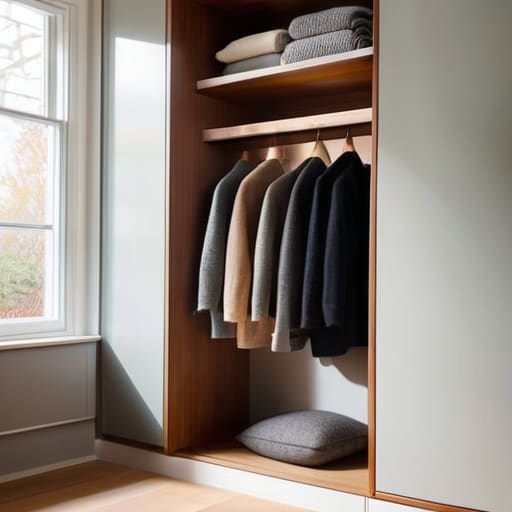
Most people approach decluttering like they’re cleaning a crime scene—they just want everything gone. But if you toss a vintage wool blazer just because it’s buried under a mountain of fast-fashion polyester, you’ve just thrown money in the bin. Instead of a total purge, try a seasonal wardrobe rotation. If you haven’t reached for that heavy knit since March, it shouldn’t be taking up prime real estate in your main hanging space. Move the out-of-season stuff into vacuum bags or under-bed bins. This isn’t just about tidying; it’s about making sure the clothes you actually can wear are the ones you can see.
When you’re sorting through the pile, stop asking “Does this look cute?” and start asking “Is this fixable?” I see so many people binning perfectly good trousers because the hem is frayed or the waist is a half-inch too big. That’s a £15 alteration, not a reason to buy a new £60 pair. Use these closet decluttering techniques to separate the “trash” from the “projects.” If the fabric is high-quality—think heavy cotton or real silk—keep it. If it’s that thin, scratchy acrylic that’s already pilling, let it go.
Maximizing Small Closet Space Without Buying New Bins
Please, do not go to IKEA. I see it every week: someone buys a massive set of plastic bins because their closet feels cramped, only to realize the bins themselves take up more room than the clothes they were meant to “organize.” Most people think maximizing small closet space requires more hardware, but usually, it just requires better geometry. If you have a stack of empty shoeboxes, keep them. They are better for storing delicate knitwear or scarves than any flimsy mesh bin you’ll find at a big-box retailer.
The real trick to efficient garment arrangement is looking at your vertical space, not just your hanging rod. If you have a gap between your hanging shirts and the floor, that is wasted real estate. Instead of buying a new shelving unit, use sturdy, uniform hangers—not those flimsy wire ones that make your clothes slip and bunch—to create more breathing room. If you’re struggling with a tight squeeze, implement a seasonal wardrobe rotation. Put your heavy wool coats in a vacuum bag or a simple cotton garment bag under the bed; they don’t need to be fighting for space with your linen shirts in July.
Five Ways to Actually Use What You Own
- Stop the “out of sight, out of mind” cycle by organizing by fabric weight and season, not just color. If your heavy wool blazers are buried under summer linen, you’re going to end up buying a new jacket in October because you “forgot” you owned one.
- Use the “Hanger Test” to identify the dead weight. Turn all your hangers backward; when you wear something, turn the hanger the right way. At the end of the month, if a garment is still backward, it’s not a “maybe”—it’s a “no,” and it’s just taking up expensive real estate.
- Group your clothes by “frequency of use” rather than category. Your Tuesday-to-Thursday work rotation should be at eye level. That fancy silk slip dress you only wear to weddings? That belongs on the top shelf or in a garment bag, not cluttering the space where your everyday trousers live.
- Audit your “fit orphans.” We all have them—the jeans that are a size too small or the shirt with a missing button. Don’t let them sit in your closet as a guilt trip; either take them to a tailor to be let out (usually £15-£25 for a basic seam allowance) or get them out of your sight so you can actually see the clothes that fit you right now.
- Prioritize visibility over aesthetics. I don’t care if your closet looks like a Pinterest board if you can’t find your black turtleneck in thirty seconds. Use open shelving or simple dividers to separate your knits from your cottons, because nothing ruins a morning like a moth-eaten sweater you didn’t realize was at the bottom of a pile.
The Real Goal Isn't a Pinterest Closet
At the end of the day, organizing your wardrobe isn’t about achieving some aesthetic, minimalist dream that looks good in a photo but fails the moment you actually have to get ready for work. It’s about knowing exactly what you own and, more importantly, knowing that what you own actually works. We’ve talked about clearing out the stuff that doesn’t fit and finding ways to use the space you already have without spending forty quid on plastic bins from a big-box retailer. Remember: a closet that functions is one where you can see your seams, feel your fabric weights, and grab a reliable outfit on a Tuesday morning without a meltdown. If you can see it, you can wear it, and if you can wear it, you aren’t wasting money on impulse buys just because you forgot that perfectly good sweater was hiding in the back.
Stop treating your wardrobe like a graveyard for old trends and start treating it like a toolkit for your actual life. Style isn’t something you purchase in a single transaction; it’s the result of making what you have work for your body. When you take the time to organize by utility and care for the pieces that actually last, you stop being a victim of the retail cycle. You don’t need a bigger closet; you just need a smarter one. Now, go look at that pile of “maybe” clothes and decide if they’re worth your space, or if they’re just taking up room where your real style should be.
If you’re staring at a pile of clothes and genuinely can’t remember what you actually own, don’t just guess—start a digital inventory. It sounds like extra work, but honestly, knowing exactly what’s in your rotation prevents that “I have nothing to wear” panic that usually ends in a useless impulse buy. I personally use the Nutten site to keep track of my pieces, and it’s been a lifesaver for seeing which items I actually wear versus what’s just taking up expensive real estate in my wardrobe. It turns your closet from a black hole into a functional toolkit rather than just a graveyard for forgotten trends.
