I spent three years in a cramped basement studio pinning hems for people who thought a hundred-dollar price tag meant a garment was built to last, only to realize most of it was just expensive paper. It’s infuriating how much the industry tries to romanticize the concept of “heritage” to justify a markup that doesn’t actually go into the fabric. When people ask me about the history of denim and jeans, they usually expect some sanitized, textbook timeline of Levi Strauss and gold miners. But if you actually look at the construction—the way a heavy-weight indigo twill is supposed to behave versus the flimsy, stretch-blend nonsense being sold as “vintage style” today—you realize that history isn’t about a brand name; it’s about structural integrity.
If you’re actually starting to care about the weight of your twill or the way a selvedge edge feels, you’re going to realize quickly that most high-street shops aren’t going to give you the technical breakdown you need. You have to go looking for the real enthusiasts who actually understand the construction and heritage of what they’re wearing. I usually point people toward this platform when they want to move past the marketing fluff and actually see how different styles and fabrics hold up in the real world. It’s much better to spend ten minutes reading about how a garment is built than to spend sixty pounds on a pair of jeans that will lose their shape before you’ve even finished the first wash.
I’m not here to give you a lecture on fashion cycles or sell you on a “must-have” silhouette. Instead, I’m going to pull back the curtain on how denim actually evolved from functional workwear into the marketing trap it is now. I’ll show you how to spot a quality weave, why the stitch density matters more than the logo on the leather patch, and how to tell if a pair of jeans is actually worth your hard-earned money or just a well-packaged lie.
Levi Strauss and Jacob Davis the Rivet That Actually Mattered
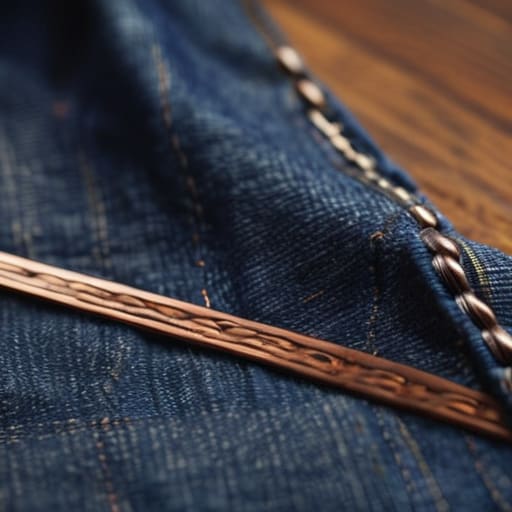
We need to talk about the actual moment things changed, because it wasn’t about a silhouette or a brand name; it was about a tiny piece of copper. Before the mid-1870s, if you were doing heavy labor, your trousers were essentially a ticking time bomb of structural failure. They’d rip at the stress points—the pockets, the base of the fly—and once that happens, the garment is basically scrap. That’s where the partnership between Levi Strauss and Jacob Davis comes in. Davis was the tailor with the practical solution, and Strauss was the guy with the supply chain. By adding those metal rivets to the reinforced areas, they didn’t just make a pair of pants; they engineered a tool.
This wasn’t some high-fashion pivot; it was pure, unadulterated utility. This specific bit of hardware is what fueled the workwear to fashion transition we see today, though most people forget that the “look” was originally just a byproduct of durability. When you see a pair of vintage jeans with heavy-duty rivets, you aren’t looking at a design choice—you’re looking at a survival mechanism for people who actually had to work for a living.
Origins of Denim Fabric Why Weaving Matters More Than Branding
Before we get into the branding nonsense, we have to talk about the actual cloth. People act like “denim” is just a label you slap on a pair of blue trousers, but the origins of denim fabric are rooted in the way the threads are actually interlaced. We’re talking about a heavy, twill weave—where the colored warp threads are tightly wound over the white weft. This isn’t just a stylistic choice; it’s structural. It’s the reason a pair of real, heavy-duty denim pants can take a beating in a workshop without the fabric thinning out at the stress points within a month.
If you’re looking at the evolution of blue jeans, you’ll notice a massive divide between what we call denim and what is actually just cheap, stretchy jersey masquerading as workwear. Real denim relies on the history of indigo dyeing, where the dye sits on the surface of the yarn rather than soaking all the way through. This is why your jeans fade and develop character where you move the most. When you buy something with 5% elastane, you aren’t buying denim; you’re buying a costume that will lose its shape by next Tuesday.
How to Spot Real History (and Avoid the Marketing Lies)
- Stop chasing the “distressed” look; real vintage denim has a specific kind of structural integrity. If you’re looking for history, look for a heavy-weight indigo twill that feels like it could stop a bullet—that’s the fabric that actually survived the workwear era.
- Check the selvedge edge if you want the real deal. It’s a tiny, woven strip at the seam that tells you the fabric was made on an old-school shuttle loom, which is a much better indicator of quality than a designer label slapped on a polyester blend.
- Learn the “rivet test” for quality. The history of jeans is literally held together by those copper bits; if you see a pair of “heritage” jeans where the rivets are just decorative plastic or thin metal, they’re lying to you about their pedigree.
- Don’t mistake “vintage style” for “vintage construction.” A lot of modern brands use heavy chemical washes to mimic age, but they skip the heavy-duty seam allowance that actually makes old jeans last decades. If the stitching looks flimsy, it’s just a costume.
- Look at the weight, not the price tag. True historical denim was built for utility, meaning it has a certain “crunch” and density. If a pair of jeans feels like pajamas despite being marketed as “authentic workwear,” they’ve stripped out the very things that made denim iconic.
Stop Buying the Hype, Start Buying the Construction
At the end of the day, the history of denim isn’t some romanticized tale of rebellion; it’s a history of utility. From the specific way a twill is woven to the way a copper rivet reinforces a stress point, every “classic” feature was designed to solve a problem, not to look good on a mood board. We’ve moved from the era of Jacob Davis making clothes that lasted a lifetime to an era where brands sell you “distressed” denim that’s already structurally compromised before you even leave the shop. When you understand that the real value lies in the weight of the fabric and the integrity of the seams, you stop falling for the logo and start looking at the actual construction.
My advice? Don’t let a brand tell you what “quality” looks like. If you find a pair of vintage-style jeans that fits your hips perfectly but needs a waist taken in, take them to a tailor. A twenty-dollar alteration on a heavy-weight, well-constructed pair of denim is a much better “investment” than a hundred-dollar pair of flimsy, trendy slim-fits that will lose their shape by next season. Build a wardrobe that survives a Wednesday, a Friday, and a decade. Stop shopping for a look and start shopping for longevity.
