I spent three years pinning hems in a cramped bridal studio, and if there is one thing that taught me, it’s that the number on a garment tag is essentially a random guess. I once had a client come in crying because she’d ordered a “perfect” 1980s blazer online, only to find it fit like a child’s costume because she trusted the label. That is the biggest lie in secondhand shopping: the assumption that a size 12 is a size 12 regardless of when it was made. Understanding how vintage sizing differs isn’t about learning a new math formula; it’s about realizing that brands used to cut clothes for human bodies, not for the arbitrary, shrinking standards of fast-fashion marketing.
I’m not here to give you a history lesson or tell you to “embrace the era.” I’m here to tell you exactly which measurements to grab and how much a tailor will actually charge to take in those massive 70s waistbands. I will show you how to spot a garment that’s actually worth the fix and which pieces are just expensive fabric scraps. By the end of this, you’ll stop shopping by the tag and start shopping by the actual inches.
Why Your 1970s Tag Is Lying to You
Here is the reality: if you find a gorgeous silk blouse with a tag that says “Size 12,” do not—I repeat, do not—assume it will slide over your shoulders like a modern medium. We are talking about a completely different mathematical universe. The clothing size evolution history is a messy, non-linear disaster of changing manufacturing standards and different ideas of what a “standard” body looks like. In the 70s, they weren’t grading patterns for the same proportions we see in fast-fashion warehouses today.
Most of the time, you’re dealing with era specific garment construction that prioritizes a very specific silhouette—think high, tight waists and narrower hips. If you’re looking at a vintage piece, you have to stop looking at the number and start looking at the actual inches. I always tell my clients to ignore the label and start measuring vintage waistlines directly against their own. If you don’t, you’re just buying a very expensive piece of fabric that’s destined to sit in a box because it won’t zip.
The Clothing Size Evolution History They Wont Teach You
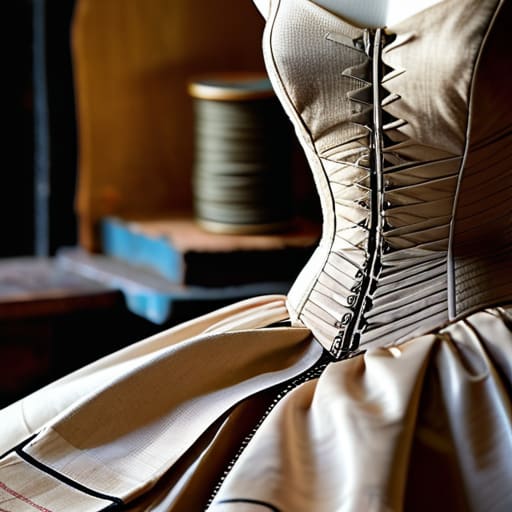
The reason you can’t just swap a modern 12 for a 1950s 12 is that the industry hasn’t actually had a consistent way of measuring humans for the last seventy years. Back in the day, era specific garment construction was the rule. Tailors worked with natural silhouettes and much more rigid structures. If you were buying a dress in the fifties, it was built to hold you in a very specific, sculpted way. There was no “comfort stretch” to hide behind.
As we moved into the seventies and eighties, the way we cut clothes shifted toward more relaxed, looser shapes, but the numbers stayed weirdly tethered to old standards. You’ll notice that understanding vintage fabric stretch is basically the missing link here; modern clothes rely on elastane to do the heavy lifting for you, whereas vintage pieces are often 100% cotton, wool, or silk. If there’s no give in the weave, that size is going to feel like a cage unless you get the measurements right. It isn’t a failure of your body; it’s just a different way of math.
How Vintage Sizing Differs and Why the Math Matters
Here is the reality: a vintage clothing size conversion chart is basically a work of fiction. You can find a hundred charts online, but they all assume that a “size 12” has a universal meaning, which it hasn’t for decades. The math matters because if you buy based on the number on the tag, you aren’t just getting a bad fit; you’re likely paying for a garment that requires a total structural overhaul.
When I’m looking at era specific garment construction, I’m looking for how the fabric was intended to sit against the body. Pre-stretch era pieces were built to be precise—if your waist is an inch wider than the seam allowance allows, you’re looking at a costly reconstruction rather than a simple tweak. You also have to factor in understanding vintage fabric stretch; or rather, the lack of it. Modern clothes use elastane to cheat a fit, but vintage wool or heavy cotton has zero give. If you don’t measure the actual inches of the garment against your own, you’re just gambling with your money.
Era Specific Garment Construction the Death of Modern Stretch
Here is the reality: modern clothes are basically made of rubber. We’ve become so addicted to elastane and Lycra that we’ve forgotten what actual structure feels like. Most of what you see in high-street shops today relies on that “give” to hide mediocre pattern cutting. If a pair of jeans is two inches too small, you just pull them on because the fabric stretches. But when you’re looking at era specific garment construction—say, a structured wool skirt from the 1950s or a heavy cotton shirt from the 80s—that luxury is gone. There is zero forgiveness in those fibers.
This is where most people trip up. They see a “Size 12” and assume it will behave like their modern Size 12. It won’t. Because you aren’t understanding vintage fabric stretch (or the complete lack thereof), you end up buying something that looks great on a hanger but won’t let you sit down in a cafe. If the fabric is 100% cotton or wool, you have to shop for the widest part of your body and let a tailor take in the rest. It’s cheaper to nip in a waist than to try and stretch a vintage seam that simply refuses to budge.
Measuring Vintage Waistline vs Your Modern Vintage vs Modern Sizing Guide
Stop relying on a vintage clothing size conversion chart you found on a random Pinterest board. Those charts are mostly guesswork, and if you follow them blindly, you’re going to end up with a pair of 1950s trousers that won’t even clear your hips. The truth is, a “size 12” from 1960 is a different animal entirely compared to a fast-fashion size 12 today. You cannot compare them by the number on the tag; you have to compare them by the actual inches.
When you’re measuring vintage waistline dimensions, do not just pull the fabric taut like you’re measuring a piece of string. You need to lay the garment flat on a table, smooth out the wrinkles, and measure the waistband from one side to the other. Double that number to get your circumference. This is where most people trip up. If you’re looking at a vintage vs modern sizing guide, remember that modern clothes rely on elastane to do the heavy lifting, whereas older pieces rely on precise tailoring. If there is zero stretch in the weave, that measurement is your absolute hard limit.
My non-negotiable rules for not getting scammed by a size tag
- Forget the number on the label and find your actual measurements; a vintage ’14’ might have the circumference of a modern ‘6’, so if you aren’t measuring the actual garment in inches or cm, you’re just gambling with your money.
- Check the fabric composition before you even look at the size, because a 1960s wool dress with zero elastane will never behave like your modern jersey blends, meaning you actually need more ease in the bust and hips to breathe.
- Look at the shoulder seams to see if the garment is worth the alteration cost; if the shoulders are too narrow, you’re looking at a massive repair bill that usually makes the “bargain” a total loss.
- Always ask for the “flat lay” measurements of the waist and pit-to-pit, because “it fits like a medium” is a useless opinion that will only lead to a return or a very expensive mistake.
- Don’t be afraid of a slightly larger size if the structure is right; I’d much rather take in a beautiful 1950s silk blouse for £15 than try to squeeze into a “perfectly sized” piece that pulls at the buttons.
Stop trusting the number on the tag
A size 12 from 1965 isn’t a size 12; it’s a mathematical lie. If you buy based on the number instead of the actual inches, you aren’t ‘finding a bargain,’ you’re just paying for a garment that’s going to sit in your closet because the seam allowance isn’t wide enough to let you breathe.
Neve Okonkwo-Barr
The bottom line on the numbers
Look, if you walk into a charity shop or an online vintage store expecting a size 12 to fit like a modern size 12, you are going to end up with a pile of expensive fabric that you can’t actually wear. We’ve covered why the tags are lying, how the lack of elastane makes the measurements non-negotiable, and why your measuring tape is more important than any label. Remember: the history of the garment tells you how it was made, but the actual inches tell you if it’s going to work for your body. Before you hit ‘buy’ or grab that blazer from the rack, check the bust, the waist, and the shoulder width. If the math doesn’t add up, don’t force it—just walk away or budget for the tailor.
At the end of the day, style isn’t about fitting into a specific number on a piece of cardboard sewn into your waistband. It’s about finding pieces that respect your shape and actually last longer than a single season. Stop letting the industry make you feel like you’ve “grown out” of clothes when, in reality, the sizing has just shifted under our feet. Use the measurements, find the quality fabrics, and if a piece is perfect but needs a little help at the seams, take it to a professional. Building a wardrobe that works for a Wednesday—or any day, really—is about knowing your own dimensions, not chasing a ghost in a vintage tag.
Frequently Asked Questions
If I find a vintage piece that's two sizes too big, is it actually worth paying a tailor to take it in, or will the original seam placement make it look weird?
It depends entirely on where the “excess” is. If it’s just the waist or the sleeve length, go for it—that’s a standard fix. But if the shoulders are drooping or the armholes are cut too low, run. Fixing shoulder seams is expensive and often ends up looking like a puppet’s suit. Before you commit, check the seam allowance. If there’s no extra fabric inside to work with, you’re just paying for a disaster.
Can I still use my current measurements to shop online for vintage, or am I basically just guessing?
If you’re using your current measurements to shop vintage online, you aren’t just guessing—you’re playing roulette. A “size 12” from 1960 is a different animal than a 2024 size 12. Stop looking at the tag and start looking at the flat-lay measurements. If the seller hasn’t listed the actual inches for the bust and waist, walk away. Otherwise, you’re just buying an expensive piece of fabric that’s destined for my alteration table.
How do I tell if a vintage garment has been "resized" by someone else before it even got to the charity shop?
Look for the “telltale” signs: uneven seam allowances or stitching that looks slightly off-center. If the side seams look chunky or the thread color doesn’t quite match the original, someone’s been playing tailor. Most importantly, check the labels. If the tag is tucked weirdly or looks suspiciously crisp compared to the fabric, it’s likely been moved. A professional resize is clean; a DIY job usually leaves a messy trail of extra needle holes.
