Stop letting brands convince you that a “complete guide to jewellery” needs to start with a five-figure budget and a trip to a boutique on Bond Street. Honestly, most of that advice is just expensive marketing designed to make you feel like your collection is “incomplete” unless you’re buying gold-plated nonsense that will turn your neck green by next Tuesday. I spent two years in a basement studio watching people pay hundreds for “statement pieces” that were actually just poorly constructed alloys with flimsy clasps that snap the moment you try to put them on. You don’t need a vault; you need pieces that actually hold their shape and don’t fall apart when you’re living a real, messy life.
I’m not here to sell you on the magic of luxury; I’m here to show you the actual maths of durability. In this guide, I’m going to break down what metals actually survive a year of daily wear, how to spot a cheap solder job from across the room, and how to build a capsule collection that works on a Tuesday morning just as well as a wedding. This is about longevity and logic, not hype.
Stop Chasing Sparkle a Realists Complete Guide to Jewellery
The biggest lie the industry tells you is that a higher price tag automatically equals better quality. I see it all the time: someone spends three months’ rent on a “statement” necklace, only to have the clasp snap or the plating rub off against their skin within a fortnight. When you’re navigating the world of fine vs fashion jewellery, you have to stop looking at the shine and start looking at the construction. If the metal feels light, hollow, or suspiciously warm to the touch, it’s likely a cheap alloy that will turn your neck green by Tuesday.
Instead of chasing the trendiest shape, look for the marks that actually matter. I’m talking about checking the precious metal purity standards stamped on the inside of a band or the back of a pendant. A tiny ‘925’ or ‘750’ isn’t just a number; it’s your proof that the piece won’t disintegrate the moment you apply basic jewellery cleaning techniques. Don’t buy something just because it’s “sparkly”—buy it because the weight of the metal and the integrity of the setting mean you won’t be replacing it next season.
Fine vs Fashion Jewellery the Math Behind the Metal
Here is the truth: the marketing departments love to blur the lines, but your bank account won’t. When we talk about fine vs fashion jewellery, we aren’t just talking about how much it costs; we are talking about the chemistry of what you’re putting against your skin. Fashion jewellery is usually a base metal—think brass or zinc—dipped in a thin layer of gold. It looks great in the shop, but after three wears and a bit of sweat, that plating starts to flake, and you’re left with a green ring finger and a piece of junk.
If you want something that actually lasts, you have to look at precious metal purity standards. I’m looking for the hallmarks—the tiny stamps that tell you if it’s 14k gold or sterling silver. If a brand won’t tell you exactly what the metal content is, walk away. I’d rather have one solid gold hoop that I can wear every single day for five years than ten pairs of “gold-tone” earrings that turn black by next Tuesday. Real value isn’t about the shine; it’s about the substance.
Decoding Purity Standards and Real Gemstone Identification Tips
Look, don’t let a shiny sticker fool you. When you see a tiny “925” or “14K” stamped on a piece, that’s your first line of defense. These precious metal purity standards are the only thing standing between you and a green neck by next Tuesday. If you’re buying gold, you need to know if it’s solid or just heavily plated. I always tell my clients: if the price seems too good to be true for “18k gold,” it’s because it’s likely gold vermeil or just a thin wash over brass. If that layer wears off, you aren’t left with a vintage treasure; you’re left with a piece of junk that’s impossible to fix.
The same logic applies to the stones. I’m not saying you need to be a trained gemologist, but a few basic gemstone identification tips go a long way. Real stones have natural imperfections—tiny inclusions or slight irregularities that catch the light uniquely. If a “ruby” looks like it was birthed in a laboratory and is perfectly, eerily flawless, it’s probably glass or a highly synthetic resin. Real stones have weight and a certain “soul” to their refraction that cheap plastic simply can’t mimic.
The Truth About Investment Grade Gemstones and Actual Value
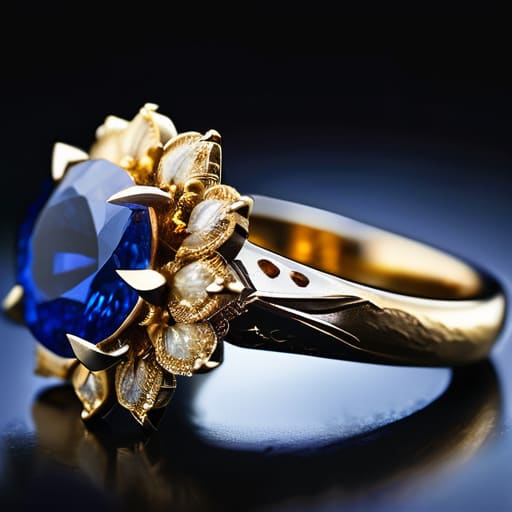
Listen, when a salesperson starts using the phrase investment grade gemstones to justify a three-month salary, I want you to take a very deep breath and look at the stone’s setting. A high-carat sapphire is only an “investment” if it doesn’t fall out of a poorly soldered prong the first time you wash your hands. I’ve seen people spend thousands on stones only to realize the metal holding them is so soft it deforms within a month. Real value isn’t just the clarity of the rock; it’s the structural integrity of the piece. If the setting looks flimsy, the stone is just a very expensive way to lose your money.
You also need to distinguish between “resale value” and “wearable value.” Most people buy jewelry to wear it, not to keep it in a velvet box like a hedge fund. If you’re buying something because you think it will appreciate, you’re playing a different game than someone just trying to look sharp on a Tuesday. Don’t get distracted by the hype; focus on durability and craftsmanship. If you can’t see how the piece will hold up against daily life, it isn’t an investment—it’s just a high-priced liability.
Practical Maintenance Cleaning Techniques and Measuring Ring Size
First off, let’s talk about the stuff you’re actually wearing. Most people treat their jewellery like it’s indestructible, but if you’re wearing fine vs fashion jewellery, your maintenance needs are worlds apart. If you’ve got real gold or silver, skip the harsh, scented supermarket cleaners that contain abrasives; they’ll eventually pit the surface. For most pieces, a bowl of lukewarm water and a drop of mild dish soap with a soft-bristled toothbrush is the gold standard. Just don’t go scrubbing at your pearls like you’re cleaning a grout line—they’re organic and delicate, and once that luster is gone, it’s gone.
Then there is the nightmare of the “perfect” ring. I see people buying gorgeous pieces online only to realize a week later that they’re sliding off or cutting off circulation. If you want to know how to measure ring size without a professional jeweler present, don’t rely on those flimsy plastic consumer kits. Grab a piece of non-stretchy string or a thin strip of paper, wrap it around the base of your finger, and mark it precisely. Measure that length against a millimeter ruler. It’s not 100% foolproof, but it beats the alternative of spending fifty quid on a resize because you trusted a website’s “average” sizing.
The "Don't Get Ripped Off" Checklist: 5 Things to Check Before You Tap Your Card
- Check the weight and the clasp. If you’re buying a “solid” gold necklace and it feels like a piece of dried pasta, it’s likely hollow or plated. A flimsy clasp on an expensive piece is a red flag; if it breaks in a month, you’re looking at a repair bill that eats up all your initial savings.
- Look at the jump rings. If you’re buying earrings or a charm bracelet, check if the little metal loops are “soldered” (closed all the way around) or just “open” (a simple circle). Open rings will pull apart the second they catch on your knitwear, and I don’t want to be the one sewing a replacement loop onto your earring later.
- Beware the “Adjustable” trap. “One size fits all” is marketing speak for “we didn’t bother making different lengths.” If a necklace is adjustable with a cheap sliding knot, it’ll lose its tension by Tuesday. If you want a piece that actually sits where it’s supposed to, look for a proper extender chain.
- Test the “Scratch Factor” on stones. You don’t need a lab, but you do need common sense. If a “gemstone” is being sold for a price that seems too good to be true, it’s probably glass or soft resin. These will scratch against your keys or your handbag lining within weeks, and once a stone is scratched, that “sparkle” is gone for good.
- Ask about the “Serviceability.” Before you buy a statement piece, ask: “Can a local jeweler fix this if a prong bends?” If the design is so avant-garde or weirdly constructed that a standard jeweler won’t touch it, you aren’t buying a piece of jewelry; you’re buying a very expensive paperweight.
The Real Cost of 'Forever' Pieces
Stop letting marketing departments use the word ‘investment’ to justify a massive markup; a piece of jewellery isn’t an investment just because it’s expensive, it’s an investment if the metal is heavy enough to last a decade and the clasp doesn’t feel like it’s going to snap the first time you try to put it on.
Neve Okonkwo-Barr
The Bottom Line
At the end of the day, jewellery isn’t about how much you can flex on your Instagram story; it’s about knowing exactly what you’re paying for before you tap your card. We’ve looked at the math of metals, why a flimsy clasp on a “designer” necklace makes it a bad buy, and how to tell if a gemstone is actually worth the hype or just clever marketing. Remember: if you can’t identify the purity or if the construction feels like it’ll snap the first time you pull a sweater over your head, it isn’t an investment—it’s just expensive clutter. Stop letting the sparkle distract you from the structural integrity of the piece.
My advice? Build a collection that actually lives with you. I want you to wear your rings while you’re washing dishes and your hoops while you’re running errands, not just when you’re saving up for a “special occasion” that never comes. Style isn’t about owning a vault of gold; it’s about finding those few, sturdy, well-made pieces that make you feel put-together on a rainy Tuesday morning. Buy for the longevity of the metal and the reality of your lifestyle, not the promise of the brand. If it fits your life and survives the math, it’s a win.
Frequently Asked Questions
If I find a vintage piece at a charity shop that’s a bit tarnished or has a loose stone, is it actually worth paying a jeweler to fix, or am I just throwing good money after bad?
It depends on the math. If it’s a solid silver or gold piece with a heavy weight, spend the £20–£40 on a professional polish or a stone reset. That’s a win. But if it’s plated brass or a “costume” piece with a flimsy clasp, walk away. Fixing a cheap base metal is just subsidizing a landfill. Check the hallmark first; if there’s no metal value, don’t pay to save a ghost.
How can I tell if a "gold-plated" necklace is going to turn my neck green in three weeks, and is there a specific type of plating that actually lasts?
Look for “gold vermeil” or “gold filled.” If it’s just “gold plated,” the layer is so thin it’ll rub off by next Tuesday, leaving you with a green neck and a cheap-looking copper line. Vermeil means a thicker layer over sterling silver, which actually has some staying power. If the listing doesn’t specify the base metal or the micron thickness, assume it’s junk. Don’t pay “investment” prices for something that won’t survive a shower.
I have a lot of jewelry that doesn't fit quite right—like rings that slide off or necklaces that sit too low—can a jeweler actually resize these, or is that a lost cause?
It’s rarely a lost cause, but don’t expect magic. If a ring is just a bit loose, a jeweler can resize it by adding metal, but if it’s a complex band or has stones set too close to the edge, it gets tricky. For necklaces, it’s usually a simple matter of shortening the chain or adding a jump ring. Just ask for a quote first—if the fix costs more than the piece is worth, walk away.
