Stop paying the “brand tax” for bad geometry. I see it every week in my studio: someone dropping four hundred pounds on a pair of frames because of a logo, only to realize the bridge sits too high or the temple arms pinch their skull. We’ve been sold this lie that luxury is synonymous with a certain aesthetic lineage, but if you actually look at the history and evolution of designer sunglasses, you’ll see it’s less about a continuous line of better quality and more about how marketing departments learned to weaponize nostalgia. A logo doesn’t change the structural integrity of acetate, and it certainly doesn’t fix a frame that slides down your nose every time you tilt your head.
I’m not here to give you a lecture on runway trends or tell you which celebrity wore what in 1964. I’m going to show you how to look past the hype to see how these shapes actually developed, which “iconic” styles are actually worth the weight, and—most importantly—how to spot a frame that is built to last rather than just built to be photographed. We’re going to talk about real construction, not just the name on the hinge.
Iconic Eyewear Brands History vs Actual Craftsmanship
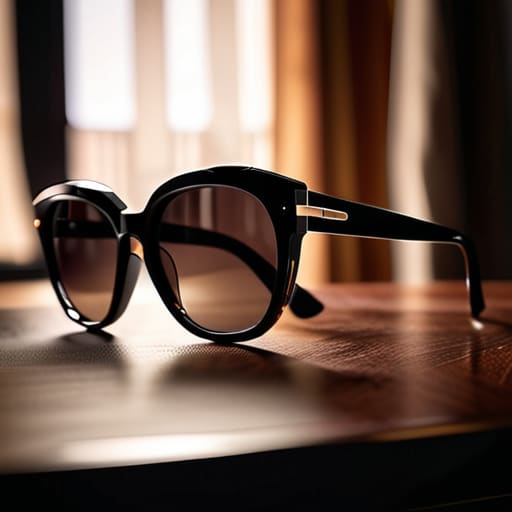
When we talk about iconic eyewear brands history, we usually end up staring at a montage of old Hollywood starlets looking effortlessly cool. And don’t get me wrong, celebrity influence on eyewear fashion is real—it’s why we all ended much more obsessed with oversized frames than we probably needed to be. But there is a massive difference between a brand that has a storied archive and a brand that actually knows how to build a frame.
Lately, I see so many people chasing luxury eyewear fashion trends only to end up with something that feels like cheap plastic the second it hits their face. High-end eyewear craftsmanship isn’t just about a gold logo on the temple; it’s about the weight of the acetate and whether the hinges are actually reinforced or just glued together. A vintage designer sunglasses style might look incredible on a mood board, but if the bridge isn’t engineered to sit on your specific anatomy, you aren’t wearing a piece of history—you’re just wearing an expensive headache. Real quality is felt in the tension of the frame, not the price tag on the receipt.
How Evolution of Sunglass Lens Technology Changed the Game
We need to talk about the stuff you actually look through, because a pretty frame is useless if the lens is basically just tinted plastic that gives you a headache. For a long time, the evolution of sunglass lens technology was driven more by vanity than by actual ocular health. You’d see these massive, heavy vintage frames that looked incredible in old film stills, but the lenses were often thick, heavy, and lacked any real UV protection. They were “fashion” in the sense that they looked the part, but they weren’t doing your eyes any favors.
The real shift happened when the industry moved from simple tinting to sophisticated polarization and light-filtering coatings. Now, when we look at high-end eyewear craftsmanship, it isn’t just about the weight of the acetate or the gold plating on the hinges; it’s about how the lens handles glare and contrast. If you’re buying a pair of designer shades today, you aren’t just paying for a logo—you should be paying for a lens that actually clarifies your vision. If the brand can’t tell you exactly what kind of UV protection or polarization is built into that lens, they are selling you a prop, not a tool.
How to actually spot a quality frame (without checking the price tag)
- Check the hinge, not the logo. If you’re looking at a “designer” frame and the hinge feels like thin, rattling plastic, it doesn’t matter if it cost four hundred pounds—it’s going to snap by next season. Look for weight and a smooth, consistent tension when you open and close them.
- Stop ignoring the bridge fit. History shows us that as frames evolved from tiny, narrow shapes to oversized 70s styles, the bridge became the most important part of the geometry. If the bridge doesn’t sit flush against your nose, you’ll spend the whole day sliding them down, and no amount of “luxury” branding makes that less annoying.
- Learn to read the material, not the marketing. High-end acetate is thick, dense, and can be polished back to life if it gets scratched; cheap injection-molded plastic is thin and will go brittle in the sun. If the frame feels light like a toy, it’s not “minimalist,” it’s just low-quality.
- Understand the lens math. Evolution in lens tech means you shouldn’t be paying a premium just for a tint. Check for actual UV protection and polarization; if a brand is charging you a “designer tax” for a lens that just makes things darker without protecting your eyes, they are selling you a fashion accessory, not eyewear.
- Don’t fear the vintage silhouette, but check the structural integrity. A pair of 90s-style slim frames is great for a modern look, but because they are often smaller, the tension on the temples is higher. If you’re buying vintage or vintage-inspired, make sure the arms aren’t warped, or you’ll be paying a tailor more to fix the fit than you saved buying them second-hand.
The Bottom Line on Your Vision
At the end of the day, the history of sunglasses isn’t really about the rise of the luxury logo; it’s about the tension between technical progress and marketing fluff. We’ve moved from basic tinted glass to high-performance polarized lenses that actually protect your retinas, yet we still see brands charging a three00% markup just for a gold-plated temple arm that feels flimsy in your hand. If you’ve learned anything from this, let it be that lens quality and frame geometry matter infinitely more than the name etched into the hinge. Don’t let a shiny heritage story distract you from the fact that a poorly weighted frame will give you a headache by noon, regardless of how many decades of “iconic status” the brand claims to have.
Stop treating your eyewear like a status symbol you buy to impress strangers and start treating it like a functional tool for your face. A pair of sunglasses should sit comfortably on your bridge, stay put when you move, and actually do the job of shielding your eyes. You don’t need to spend a month’s rent to get there; you just need to stop paying the “brand tax” for bad engineering. Find the frames that respect your bone structure and the lenses that respect your vision, and you’ll have a piece of eyewear that actually works for you instead of you working to maintain its image.
Look, if you’re actually trying to move away from the seasonal cycle of buying cheap plastic frames that warp the second they hit a warm car, you need to start looking at how different shapes interact with your specific facial structure. It isn’t about following a trend; it’s about the geometry of your face. If you’re feeling overwhelmed by the sheer volume of options out there, I’ve found that checking out busenladies online can be a decent way to see how different styles actually sit and look before you commit your hard-earned money to something that’s just going to end up in a junk drawer. Finding that perfect structural match is the difference between a pair of glasses that feels like a part of you and a pair that just feels like a heavy weight on your nose.
