I spent three years in a basement studio pinning hems for brides who thought a “flattering silhouette” could be bought off a mannequin, and let me tell you: they were wrong. Most people think they need a total wardrobe overhaul to look “balanced,” but they’re actually just fighting a losing battle against fabric that sits in the wrong places. You don’t need a new closet; you need a complete guide to proportion that actually respects your body and your bank account. Stop listening to influencers who claim you need to follow “golden ratio” rules to look expensive; most of those “rules” are just marketing fluff designed to make you feel like your current clothes are broken.
I’m not here to give you a lecture on aesthetic theory or tell you to buy more high-waisted trousers to “elongate your legs.” Instead, I’m going to show you the actual math of how clothes hang on a human frame. We’re going to talk about where a seam should hit, why your shoulder width dictates your jacket’s volume, and exactly when a £15 alteration is a better investment than a £100 new shirt. This is about making what you already own work for you on a random Tuesday.
The Math of Looking Good a Complete Guide to Proportion
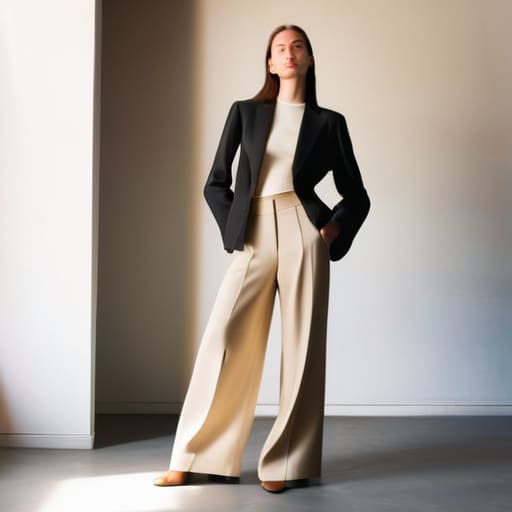
Forget the idea that you need to “balance your figure” by buying a specific shape of trouser. That is marketing nonsense. When I talk about the math of looking good, I’m talking about visual weight and composition—basically, how much “space” your clothes are taking up versus how much of your actual body is visible. If you wear a heavy, oversized wool coat with baggy trousers, you aren’t “styling an oversized look”; you’re just drowning in fabric because you haven’t accounted for where your limbs actually begin and end.
Think of your outfit like a layout. You don’t need to master the golden ratio in design to look decent, but you do need to understand where the eye rests. If you have a lot of volume on top, you need a clear line somewhere else to anchor the look, or you’ll just look like a shapeless blob. This isn’t about hiding your body; it’s about managing the spatial relationships between your clothes and your frame. If a seam is sitting two inches too low, it’s not a “relaxed fit”—it’s a math error that’s making you look shorter than you are.
Beyond the Hanger Using the Golden Ratio in Design
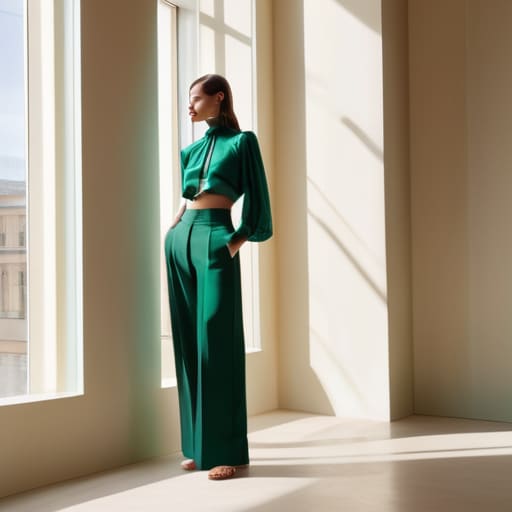
You don’t need an art history degree to understand why some outfits just click while others look like a chaotic pile of laundry. It usually comes down to the golden ratio in design, which is just a fancy way of saying our eyes love a specific kind of mathematical imbalance. In fashion, this isn’t about being a perfect mannequin; it’s about how you divide your silhouette. If you wear a long tunic over long trousers, you’ve split yourself exactly in half, which is visually stagnant and, frankly, a bit boring. Instead, aim for a 1/3 to 2/3 split. Tucking a shirt into high-waisted trousers isn’t just a “trend”—it’s using scale and proportion principles to create a focal point that makes your legs look longer and your frame more intentional.
This is where visual weight and composition come into play. A heavy, chunky knit sweater paired with flimsy silk slip skirts creates a tension that can either look high-fashion or just accidental. I tell my clients to look at where the “weight” sits. If you have a heavy coat, balance it with a structured shoe rather than a flimsy sandal. It’s about managing how the eye travels across your body so it doesn’t get stuck in one awkward spot.
Visual Weight and Composition Why Your Outfit Feels Off
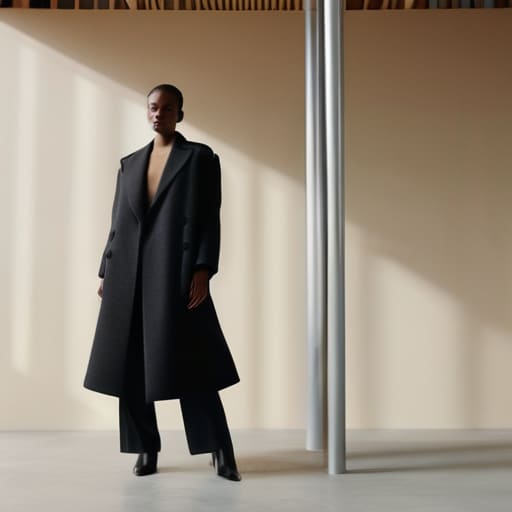
If you’ve ever looked in the mirror and felt like your clothes are “wearing you” rather than the other way around, you aren’t failing at fashion; you’re just struggling with visual weight and composition. Think of your outfit like a painting. If you wear a massive, heavy wool overcoat with tiny, spindly trousers, the coat is going to visually swallow your entire frame. It’s not that the coat is bad—it might be a beautiful piece—but the scale and proportion principles are out of whack. You’ve essentially put a heavy anchor on one side of a scale and expected it to stay level.
To fix this, you have to look at where the “heaviness” sits. A chunky knit sweater has more visual weight than a silk camisole. If you pair them without considering the balance, you end up looking top-heavy. You don’t need to buy a new wardrobe to fix this; you often just need to adjust the spatial relationships between your layers. Sometimes, that means adding a structured belt to define a waist or choosing a boot with a slightly thicker sole to ground a voluminous skirt. It’s about distributing the “eye-pull” so your outfit feels intentional, not accidental.
Scale and Proportion Principles for Every Human Body Proportions
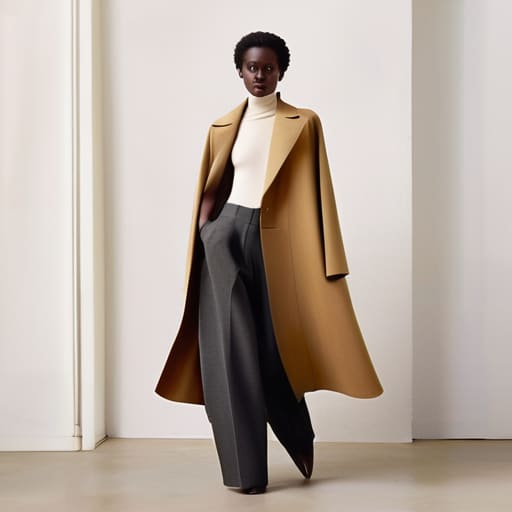
Here is the reality: most fashion advice treats your body like a static mannequin, but humans are actually a series of moving, shifting volumes. When we talk about scale and proportion principles, I’m not talking about “flattering your curves”—that’s marketing nonsense. I’m talking about how the volume of a heavy wool trouser interacts with the slimness of a jersey tee. If you pair a massive, oversized puffer jacket with skinny jeans, you aren’t “styling”; you’re just creating a visual imbalance that makes you look like a lollipop. It’s about managing the spatial relationships between the fabric and your actual frame so the clothes look like they belong to you, rather than you just surviving inside them.
The goal is to find an aesthetic balance that doesn’t require a new wardrobe. If you have broader shoulders, don’t run to a shop to buy “slimming” V-necks; just look for a heavier fabric weight in your tops to ground the silhouette. If your legs feel short, a simple hem adjustment—usually costing about the same as a fancy flat white—can shift your entire midline. It’s about using the human body proportions you already have as the foundation, then using fabric and fit to direct where the eye goes.
Mastering Aesthetic Balance Techniques Through Spatial Relationships in Art
When we talk about spatial relationships in art, we’re usually looking at a canvas, but your body is the canvas and your clothes are the medium. In a painting, the “negative space”—the empty area around the subject—is just as vital as the brushstrokes themselves. In styling, that negative space is the gap between your skin and your fabric. If you wear a massive, oversized puffer jacket with baggy trousers, you aren’t just wearing clothes; you are obliterating your silhouette. You’ve removed the spatial relationship between your frame and the garment, leaving nothing for the eye to catch onto.
To master aesthetic balance techniques, you have to stop thinking about “outfits” and start thinking about volume and breathing room. If you have a heavy, textured knit on top, you need a slimmer, smoother line on the bottom to create a sense of intentionality. It’s about managing how much “air” is between the fabric and your limbs. If everything is tight, you look compressed; if everything is loose, you look lost. The goal isn’t to hide your shape, but to use the space around it to create a deliberate, composed look.
The Practical Cheat Sheet: How to Stop Fighting Your Clothes
- The Rule of Thirds is your best friend, not a math exam. Stop splitting your body in half with a long shirt over long trousers; it makes you look like a rectangle. Tuck the shirt in or use a belt to create a 1/3 top and 2/3 bottom split. It’s the easiest way to trick the eye into seeing length where there isn’t any.
- Watch your hemline math. If you’re wearing wide-leg trousers, a hem that hits the floor with your shoes on looks intentional; a hem that hits your ankle looks like you grew three inches overnight. If you buy a pair of pants that are almost perfect, budget £15 for a hem adjustment. It’s the difference between looking “clunky” and looking “composed.”
- Balance your visual weight by pairing textures, not just sizes. If you’re wearing a heavy, chunky knit sweater that looks like it could double as a blanket, don’t pair it with flimsy, thin leggings that disappear under the weight. You need a sturdier fabric on the bottom—like denim or heavy twill—to keep the silhouette from looking top-heavy.
- The “Shoulder Test” is the ultimate proportion hack. If the shoulder seam of your jacket is drooping down your arm, the whole garment will look like it’s wearing you. A tailor can often take in a shoulder, but it’s expensive. If you can’t afford the fix, don’t buy the jacket. A perfect shoulder makes even a cheap cotton tee look high-end.
- Use “Volume Control” to manage your silhouette. If you’re going oversized on top, go slim or structured on the bottom. If you’re wearing big, baggy trousers, keep the top closer to the body. You can do “big on big” if you’re a very tall person with a lot of frame, but for most of us, it just looks like we’re drowning in fabric.
Stop Shopping for Proportions
You don’t need a bigger wardrobe to fix a silhouette that feels ‘off’; you usually just need to understand where your hemline hits and whether that shoulder seam is fighting your natural frame. Proportion isn’t a magic trick you buy at a department store—it’s just the math of where one fabric ends and another begins.
Neve Okonkwo-Barr
The End of the Shopping Spree
Look, we’ve covered a lot of ground—from the math of the Golden Ratio to the way visual weight can make a heavy wool coat look completely disconnected from a silk slip dress. The takeaway isn’t that you need to study geometry every time you get dressed; it’s that you need to stop blaming your body for clothes that are fundamentally poorly constructed or scaled. Most of the “proportion problems” you think you have are actually just seam and scale issues that can be solved with a bit of awareness. Instead of tossing that oversized blazer because it swallows you whole, remember that adjusting the hem or taking in the side seams for the cost of a decent lunch can completely rebalance your silhouette without you needing to buy a single new item.
At the end of the day, style isn’t about achieving some mathematical perfection that exists only on a runway. It’s about understanding how fabric and shape interact with the person actually wearing them. Don’t let the industry convince you that you’re “wrong” for your proportions; they just want you to buy more “correct” clothes. Once you understand the mechanics of weight, scale, and line, you stop being a consumer and start being a curator of your own image. Build a wardrobe that works for your actual life—the messy, mid-week, real-world version of it—and remember that fit is a fixable problem, not a permanent one.
Frequently Asked Questions
I have a huge torso and short legs; do I need to buy specific "proportional" brands, or can a tailor fix this with a simple hem and a belt reposition?
Please, do not go hunting for “proportional” brands. That is just marketing speak for “we charge more for a specific cut.” Most of those brands are just playing with seam placement to trick your eye.
How do I know if a heavy fabric, like a thick wool coat, is going to completely swallow my frame versus just looking "oversized" on purpose?
Look at the shoulder seam. If it’s drooping halfway down your bicep and the fabric is pooling at your waist, you’re being swallowed. An intentional oversized look still respects your architecture; the seam should hit near your natural shoulder, even if the body is voluminous. If the fabric is so heavy it’s pulling the collar away from your neck, it’s not a “vibe,” it’s just a bad fit. Get it taken in at the shoulders.
If I'm working with a tight budget, which part of an outfit is actually worth spending money on to fix the proportions—the trousers or the jacket?
If you’re choosing where to drop your limited cash, fix the jacket. A poorly fitting jacket ruins your entire silhouette; if the shoulders are too wide or the sleeves are too long, you look like you’re wearing a costume, not clothes. A tailor can nip the waist or shorten a hem for about £20–£30, and it instantly makes a cheap blazer look custom. Trousers are important, but you can hide a bad rise with a belt. Fix the frame first.
