Stop letting brands convince you that a £400 “technical shell” is the only way to stay dry. I’ve spent way too many hours in a basement studio watching people throw money at high-fashion logos, only to realize six months later that the fabric is too thin to actually block a gale and the armholes are cut so high they’re practically useless. If you’re staring at a sea of expensive options wondering how to choose a raincoat that doesn’t just look good in a window but actually survives a Tuesday morning commute, you need to stop looking at the price tag and start looking at the seam construction.
I’m not here to sell you on a “must-have” seasonal trend or some overpriced lifestyle brand. Instead, I’m going to show you the actual maths of a good coat: which fabric weights won’t pill after three washes, how to spot a waterproof coating that won’t flake off by winter, and which silhouettes are actually worth the cost of a quick trip to the tailor. We’re going to focus on durability and fit, ensuring you spend your money on something that works for your life, not just your Instagram feed.
Forget the Hype How to Choose a Raincoat That Actually Works

Marketing teams love to throw around words like “luxury” and “essential,” but most of those high-street coats are just glorified plastic bags. If you’re looking at a tag that says “water-resistant,” walk away unless you only plan on walking from your car to the office. There is a massive difference between waterproof rating vs water resistant; one is designed to actually stop a downpour, and the other is just a suggestion. I’ve spent too many afternoons deconstructing cheap shells only to find that the “tech” is nothing more than a thin coating that peels off after three washes.
If you want something that survives a real Tuesday in a deluge, look at the construction, not the brand name. Check for raincoat seam sealing—if those seams aren’t taped on the inside, the water will find its way to your skin regardless of how expensive the fabric was. I always tell my clients to prioritize breathable fabric technology over pure aesthetics. A coat that keeps the rain out but traps your sweat inside makes you feel like you’re sitting in a lukewarm sauna. You want a piece that works with your body, not against it.
Waterproof Rating vs Water Resistant the Math Behind the Mist
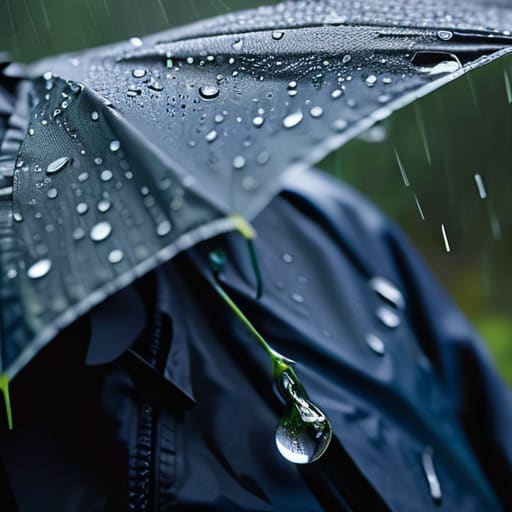
Marketing departments love to throw around terms like “waterproof” and “water-resistant” as if they are interchangeable, but they aren’t, and confusing them is how you end up soaked by lunchtime. When you’re looking at waterproof rating vs water resistant labels, you’re really looking at how much pressure a fabric can take before it gives up. A “water-resistant” jacket is basically just a polite suggestion; it’s treated with a coating that works for a light drizzle, but once the sky actually opens up, that moisture will find its way through the weave. If you’re planning on being out in a proper downpour, you need a legitimate waterproof rating—something that can actually withstand the weight of falling water.
However, don’t get so caught up in the numbers that you forget about the human inside the coat. High-end breathable fabric technology is great, but it isn’t magic. If the coat is a total plastic fortress with zero air exchange, you’ll end up damp from your own sweat before you even hit the bus stop. Also, check the raincoat seam sealing. I’ve seen “waterproof” jackets that fail within twenty minutes because the manufacturer skipped the tape on the internal seams. If the seams aren’t sealed, the rating on the tag is just a lie designed to make you click ‘buy.’
Best Materials for Rain Jackets Why Expensive Often Means Worse
Don’t let a high price tag trick you into thinking a jacket is indestructible. I see it all the time in the studio: people dropping a small fortune on a “technical” shell that looks amazing in a photoshoot but feels like wearing a plastic bin bag. The marketing tells you it’s the peak of breathable fabric technology, but if the membrane is too thin or poorly bonded to the face fabric, it’ll delaminate within a year. You aren’t buying a lifetime garment; you’re buying a chemical coating that’s destined to peel.
When looking for the best materials for rain jackets, stop looking at the brand name and start looking at the weight and the construction. A heavy-duty cotton drill with a wax finish might feel “old fashioned,” but it actually breathes and ages with you. Conversely, many high-end synthetic shells rely on DWR (Durable Water Repellent) coatings that wash out after five cycles in the laundry. If the brand doesn’t tell you exactly how to maintain the finish, they aren’t selling you quality—they’re selling you a temporary fix.
Breathable Fabric Technology and the Truth About Raincoat Seam Sealing
Here is the truth about that “breathable” label you see on every high-street jacket: it is often a marketing lie. When you are looking at breathable fabric technology, you aren’t just looking for a fancy acronym like Gore-Tex; you are looking for a way to stop your own sweat from turning your raincoat into a personal sauna. If the fabric doesn’t allow moisture vapor to escape, you might stay dry from the rain, but you’ll be soaked from the inside out by noon. I’ve seen so many people buy these “tech” shells only to realize they’ve basically bought a very expensive, very heavy plastic bag.
Then there is the technical bit that most people ignore until they are standing in a downpour: raincoat seam sealing. You can find the absolute best materials for rain jackets, but if the manufacturer skipped the heat-taped seams, the water will find its way through the needle holes in minutes. Check the inside of the garment; if you don’t see that clear, reinforced tape covering every junction where the fabric meets, walk away. It is the difference between a jacket that lasts a decade and one that fails the first time you actually need it.
From Hiking to Wednesdays Choosing Rain Gear for Wet Weather
The mistake most people make is buying for a hypothetical mountain summit when they actually just need to survive a commute to the office. If you go out and buy technical outdoor gear for wet weather—the kind with enough zippers to outfit a small army—you’re going to look ridiculous standing in a queue for a latte. Those high-performance shells are designed for movement and extreme wind, which usually means they have a stiff, crinkly texture that feels entirely wrong under a blazer or over a knit sweater.
Instead, look for a middle ground. You want something that understands the difference between choosing rain gear for hiking and just needing to stay dry while walking from the train to your desk. I always tell my clients to look at the weight of the fabric; if it’s too thin, it’ll feel flimsy and cheap, but if it’s too heavy, you’ll be sweating before you even reach the office. Aim for a mid-weight weave that offers enough structure to hold its shape, but has enough give in the shoulder seams so a tailor can easily nip in the waist if it’s boxy.
The Tailor’s Cheat Sheet: 5 Things to Check Before You Tap 'Pay'
- Check the shoulder seam, not the label. If the seam sits too far past your natural shoulder, you’re looking at a £25 hem alteration just to stop yourself from looking like you’re wearing your dad’s hand-me-downs. A raincoat that doesn’t sit right on the shoulders will never look intentional, no matter how much it cost.
- Feel the weight of the fabric, but ignore the “premium” marketing. You want something with enough substance to hold its shape when it gets damp, but if it feels like stiff, crunchy plastic, it’s going to chafe your neck and trap heat like a sauna. If it doesn’t drape, don’t buy it.
- Look for “serviceable” hardware. Cheap, flimsy zippers are the first thing to go in a storm, and replacing a stuck zipper on a technical shell can cost more than the jacket itself. Test the pull; if it catches on the fabric now, it’ll fail you when you’re actually caught in a downpour.
- Inspect the seam allowance. Turn the jacket inside out—seriously, do it. If the internal seams are raw or messy, they’ll fray after three months of wear. You want clean, taped, or bound seams. If the construction looks rushed inside, the waterproofing won’t last a season.
- Plan for the “Layering Math.” Don’t buy a raincoat that fits perfectly over a T-shirt if you actually live somewhere where you need a jumper. If you can’t comfortably zip it up with a mid-layer underneath, you haven’t bought a raincoat; you’ve bought a very expensive, very waterproof vest.
The Real Cost of a Raincoat
Stop looking at the price tag and start looking at the seam allowance and the fabric weight; a £200 coat that feels like wearing a plastic bin bag is a terrible investment, but a £40 thrifted shell that actually breathes and can be taken to a tailor for a twenty-minute hem is the smartest thing in your wardrobe.
Neve Okonkwo-Barr
The Bottom Line
At the end of the day, stop looking for a magic label that promises you’ll stay bone-dry in a monsoon. A raincoat is just a tool, and like any tool, it has to suit your specific life. If you’re mostly dodging puddles on your way to the office, you don’t need a heavy-duty Gore-Tex shell that makes you sweat like you’re in a sauna; you need a decent mid-weight fabric with sealed seams and a silhouette that doesn’t make you look like a lost hiker. Check the weight, look at the seam allowance, and for the love of everything, calculate the alteration cost before you buy. If the shoulders are too wide, you’re going to spend more at the tailor than you saved at the outlet mall.
Please, stop letting brands convince you that a high price tag equals high performance. Real style isn’t about owning the latest technical masterpiece; it’s about owning things that actually work for your body and your budget. A well-chosen, slightly used raincoat that fits perfectly and survives three years of actual weather is worth infinitely more than a “luxury” piece that sits in your closet because the fabric is too stiff or the cut is too trendy. Buy for the utility, fix the fit, and then get out into the rain.
Frequently Asked Questions
I found a vintage wool coat that looks great, but can a tailor actually make it waterproof or is that a lost cause?
Short answer: No. A tailor can fix the silhouette, but they can’t change the physics of the fiber. If that wool isn’t already treated or felted tight enough to repel water, no amount of stitching will stop a downpour from soaking through to your skin. You can spend £40 on a heavy-duty waterproofing spray, but it’s a temporary fix. Buy the vintage coat for the fit and the look, but keep a technical shell for actual storms.
Is it worth paying an extra £50 for a designer raincoat if the seam allowance is too slim to let me take it in later?
Absolutely not. That’s a trap. If the seam allowance is paper-thin, you’re buying a garment with a shelf life, not a wardrobe staple. I’ve seen £500 coats that are essentially unfixable because there’s no fabric left to work with. If you can’t take it in or out to suit your body, that extra £50 is just money thrown into a puddle. Buy the one with the extra fabric; it’s cheaper to tailor than to replace.
How do I tell if a "water-resistant" jacket is just cheap marketing for a fabric that's going to pill and fail after three washes?
Look at the weave and feel the weight. If it feels thin and “swishy” like a cheap plastic bag, it’s likely a low-grade polyester with a surface coating that will flake off in six months. Real water resistance comes from the density of the knit. If you can see light through the fabric when you hold it up, or if it feels paper-thin, that coating is going to pill and fail after three washes.
