Stop letting a salesperson convince you that you need to “find your face shape” before you even touch a pair of frames. It is the biggest lie in optical retail, designed to make you feel like you’re solving a geometry problem instead of just buying something that won’t give you a headache by noon. I’ve spent years pinning hems and adjusting waistbands, and I can tell you: fashion is about how a thing sits on a body, not some abstract rulebook about whether your jawline is “heart-shaped” or “oval.” When you are learning how to choose glasses frames, you shouldn’t be looking for a mathematical match; you should be looking at the bridge width and the temple tension.
I’m not here to talk about which colors are “trending” on TikTok or which designer labels are worth the markup. Instead, I’m going to give you the actual mechanics of a good fit: how to tell if the nose pads are going to slide down your face every five minutes and why the weight of the acetate matters more than the brand name. We are going to look at the real cost of comfort, focusing on the structural details that determine whether your glasses are a daily tool or a constant, pinching nuisance.
Stop Shopping for Aesthetics and Start Shopping for How to Choose Glasses F

Look, I see this every time I’m styling a client: they find a pair of frames that look incredible on a mood board or a celebrity, but the second they put them on, they look like they’re wearing a costume. The salesperson starts babbling about complementary eyewear aesthetics and “vibe,” but they aren’t checking if the temples are digging into your skull or if the nose pads are going to leave red divots by lunch. If the frames don’t sit correctly, the most beautiful design in the world becomes a physical nuisance you’ll end up leaving in a drawer.
Instead of obsessing over whether a shape is “correct” for you, look at the mechanics. You need to understand eyewear for different face shapes through the lens of proportion, not just rules. If you have a soft jawline, you might want some angularity, but if those sharp corners pinch your skin, the “style” is a failure. Check the bridge—if it’s sliding down your nose every five minutes, no amount of “face-framing” will save you. Stop chasing a look and start looking for a structural match to your actual head.
The Geometry of Your Face Mastering Eyewear for Different Face Shapes

Look, I know the diagrams in the brochures make it look like a math equation where you just match a circle to a square, but your face isn’t a geometry textbook. When we talk about matching frame style to facial features, we aren’t looking for a perfect mirror image; we are looking for balance. If you have a very soft, circular jawline, you don’t need to hide it, but a sharp, rectangular frame can provide the structure your face naturally lacks. Conversely, if you have high, angular cheekbones and a sharp jaw, a heavy, square frame might just make you look like you’re wearing a helmet.
The goal of finding eyewear for different face shapes is to create a visual equilibrium. For those searching for the best glasses for round faces, I usually suggest something with defined edges to add a bit of “oomph” to the silhouette. But don’t get so caught up in the shape that you ignore the scale. A tiny frame on a wide face is a disaster, and a massive oversized frame on a petite face is just going to slide down your nose every five minutes. It’s about proportions, not just shapes.
Finding the Best Glasses for Round Faces and Complementary Eyewear Aestheti

If you have a round face, the goal isn’t to “hide” your features—it’s to add some much-needed architecture. When a face has soft curves and similar width and length, wearing round or oval frames is basically a mathematical error; you’re just doubling down on the circularity. Instead, you want to look for angularity and structure. Think rectangular, square, or even a sharp cat-eye. These shapes create a visual contrast that breaks up the softness and gives your face a bit more definition.
When you’re browsing, don’t get distracted by a pretty color if the geometry is wrong. The best glasses for round faces are the ones that provide a counterpoint to your jawline. I always tell my clients to look at the brow line; if the frame adds a horizontal emphasis, it’s going to help elongate your look. Just keep an eye on the eyeglass bridge fit tips I mentioned earlier—if the bridge is too narrow and sits too high, it can make your face look even wider. You want a frame that sits with intention, not one that looks like it’s just floating on a circle.
The Math of the Bridge Critical Eyeglass Bridge Fit Tips
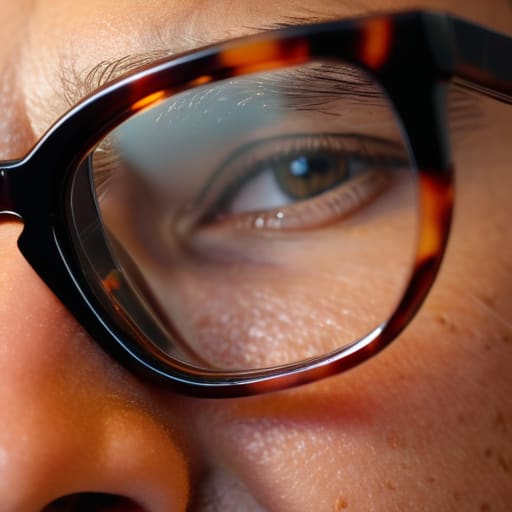
If you’ve ever spent twenty minutes adjusting your glasses because they’re sliding down your nose like a slow-motion landslide, you don’t have a “style” issue; you have a bridge issue. This is where most people fail. They find a pair that looks incredible in the mirror, but they ignore the contact point between the frame and their nose. If the bridge is too wide, the glasses will constantly migrate toward your cheeks, which is a nightmare for your vision and your patience. Conversely, if it’s too narrow, you’ll end up with those deep, red indentations that no amount of concealer can hide by lunchtime.
When you’re looking at an optical frame sizing guide, pay attention to the bridge width measurement in millimeters. If you have a low nose bridge, look for frames with adjustable nose pads—that’s the “math” that makes the difference. For those with higher bridges, a fixed acetate bridge might be your best friend. Don’t let a salesperson push a trendy shape if it doesn’t sit right; matching frame style to facial features only works if the frame actually stays where you put it.
Beyond the Trend an Optical Frame Sizing Guide That Actually Works
Look at the inside of the temple arm of the glasses you’re currently wearing. You’ll see a string of numbers—something like 52 [] 18 140. Most people ignore these, treating them like fine print on a receipt, but that is your actual optical frame sizing guide. The first number is the lens width, the second is the bridge width, and the third is the temple length. If you’re trying to master matching frame style to facial features, you have to stop guessing based on how “cool” a shape looks and start looking at these measurements. A frame might look great on a mannequin, but if that lens width is too wide for your temple width, you’re going to spend the whole day adjusting them with one finger.
I see this constantly: people searching for the best glasses for round faces only to buy a pair that is technically the right shape but mathematically the wrong scale. If the frame is too narrow, it’ll pinch your head; if it’s too wide, it’ll slide down your nose every time you look down at your phone. Don’t let a salesperson tell you a frame “suits your vibe” if the proportions are fighting your anatomy. Check the numbers before you check the mirror.
The "Don't Get Ripped Off" Checklist: 5 ways to know if those frames are actually worth it
- Check the hinge tension immediately. If you pick up a pair and they feel like flimsy plastic toys, they’ll be sitting crooked on your face by Tuesday. You want a hinge that has a bit of weight and resistance; if it feels loose or “clicky” in the shop, it’s going to lose its grip on your temples within a month.
- The “Temple Test” for headache prevention. Slide the glasses on and check where the arms hit your head. If they are pressing against the bone behind your ear or squeezing your temples right away, do not buy them. No amount of “cute” will make up for a tension headache that lasts until 4 PM.
- Look at the nose pad material, not just the shape. If you’re buying acetate (plastic) frames, make sure they aren’t so heavy that they’ll leave deep red divots in your nose by lunch. If you have a flatter nose bridge, you’re going to need those adjustable metal pads—otherwise, you’re just paying for a pair of glasses that will constantly slide down to the tip of your nose.
- Evaluate the weight-to-material ratio. A heavy frame might look expensive, but if you’re wearing it for 12 hours a day, that weight is going to pull on your bridge and cause discomfort. I’d rather see a lightweight titanium or a high-quality thin acetate than a chunky, “statement” frame that feels like a brick on your face.
- Do the “Smile Check” for cheek contact. Put the frames on and give yourself a wide, genuine grin. If the bottom of the frames lifts up or hits your cheeks every time you laugh, they are too large for your facial structure. You want glasses that stay put when you’re actually living your life, not something that requires you to hold a frozen expression to keep them in place.
The real cost of a "pretty" frame
Stop letting a salesperson convince you that a frame is “your look” just because it’s trending on your feed. If those temples pinch your skull or the bridge leaves red marks on your nose by noon, you aren’t wearing style—you’re wearing a headache. A beautiful frame that doesn’t fit is just an expensive way to look uncomfortable.
Neve Okonkwo-Barr
The Bottom Line on Your Vision
At the end of the day, choosing glasses isn’t about finding the one pair that looks “correct” in a high-gloss marketing campaign; it is about the physical reality of how they sit on your face. We have covered the geometry of your bone structure, the vital importance of bridge fit, and why the numbers on the inside of the temple arm matter more than the brand name on the side. If the frames pinch your temples, slide down your nose every ten minutes, or feel like a heavy weight pulling at your bridge, they are a bad purchase, regardless of how much they cost or how “on-trend” they are. Don’t let a salesperson convince you that a certain shape is your “destiny” if the actual mechanics of the fit are working against you.
Stop treating eyewear like a decorative accessory and start treating it like a piece of structural engineering. Your glasses are the only thing you wear on your face for sixteen hours a day, and they should feel like an extension of your anatomy, not a constant distraction. You don’t need a massive wardrobe of different styles; you just need one pair that respects your proportions and stays exactly where you put it. When you prioritize function over fashion trends, you stop being a victim of the industry and start building a wardrobe that actually works for your real, everyday life.
Frequently Asked Questions
If I find a pair of vintage frames I love but they're too wide for my face, is it actually possible to have them narrowed down by an optician?
It depends entirely on the material. If they’re acetate, yes—an optician can use heat to adjust the temples, or a specialist can sometimes trim the excess, though that’s a permanent, high-stakes move. If they’re metal, it’s much harder to “shrink” the frame itself without ruining the structural integrity. Before you buy, check the temple length and hinge. If the math doesn’t work, no amount of heat will make them sit right.
How can I tell if a frame is made of cheap, flimsy acetate versus something that will actually hold its shape after six months of daily wear?
Don’t just look at the color; feel the weight and the temperature. Real, high-quality acetate is dense; it feels substantial in your hand and stays cool to the touch. If it feels like lightweight, hollow plastic, it’s probably injection-molded junk that will warp the moment it hits your face heat. Give the temples a gentle flex—if they feel “springy” in a way that suggests they’ll lose their tension, walk away. You want something that holds its shape, not something that becomes a headache by lunchtime.
My glasses always slide down my nose when I smile or sweat; is that a bridge fit issue or do I just need different temple tips?
It’s probably both, but start with the bridge. If the bridge is too wide, the frames are just waiting for any excuse—like a smile or a bit of sweat—to gravity-slide down your face. A bridge that doesn’t grip means the weight isn’t distributed. If you tighten the temple tips (the part behind your ears) and they still slip, the frame is fundamentally too large for your anatomy. Don’t buy new ones yet; go to an optician and ask for a bridge adjustment first.
