I remember sitting on a milk crate in a basement studio three years ago, surrounded by the hum of a heavy-duty Juki and the smell of scorched polyester, staring at a pile of commissions that felt like a mountain. I had said “yes” to every single client because I thought more work equaled more success, but I was actually just sewing my own burnout into every seam. People treat productivity like it’s an all-or-nothing garment—you either wear the whole thing or you don’t—but they never talk about how tapering and taking in work is actually the only way to keep the structure from collapsing. If you try to take on a massive project without adjusting your capacity, you aren’t being “ambitious”; you’re just stretching your seams until they inevitably rip.
I’m not here to give you some vague, aesthetic “soft life” advice that sounds good on a mood board but fails on a Tuesday morning. Instead, I’m going to show you the actual mechanics of scaling your output without losing your mind or your quality. We are going to look at the math of your capacity, how to identify which tasks are high-maintenance “designer” jobs and which are your reliable basics, and how to strategically trim your workload so you actually have the energy to do the work that matters.
Stop Buying New the Math of How Tapering and Taking in Work
We need to stop treating a slightly loose waistband like a reason to visit a department store. Every time you see a “sale” sign and think, “I’ll just buy a new pair that actually fits,” you are falling for the oldest trick in the book. Most of the time, you aren’t buying a better fit; you’re just buying more fabric that will eventually sit in a pile. Instead, look at the math. If you have a pair of trousers that are great everywhere except the middle, how to take in waistline measurements becomes a much cheaper equation than a £60 replacement.
I’ve spent years in a basement studio seeing people throw away perfectly good wool because the silhouette felt “off.” Usually, it’s just a matter of sewing side seam adjustments to reclaim the shape. If you’re looking at a skirt or a blazer, don’t panic about the size on the tag. Think about the structural integrity of the piece. A high-quality vintage find with a bit of extra room is infinitely more valuable than a fast-fashion piece that fits perfectly today but loses its shape by next Tuesday. Real style is about reclaiming what you already own.
The Architecture of Shape Mastering Sewing Side Seam Adjustments
When you’re looking at a garment that’s hanging off you like a heavy curtain, the side seam is your best friend. Most people think they need to buy a new size, but usually, you just need to master sewing side seam adjustments to reclaim your silhouette. The trick isn’t just pulling the fabric tight; it’s about following the natural curve of your body. If you’re tackling trousers, you’ll be tapering pants legs to remove that awkward, baggy excess around the calf that makes you look shorter than you are.
But don’t just go rogue with the shears. You have to respect the original construction. If you’re adjusting a heavy wool blazer, you can’t just sew a straight line from armpit to hem—it’ll pull and create weird puckers that look cheap. You need to mimic the original tailor’s curve. When you’re adjusting clothing fit this way, you aren’t just making it smaller; you’re re-engineering how the weight of the fabric sits on your hips. It’s the difference between a piece that looks “fixed” and one that looks like it was actually made for you.
Tapering Pants Legs Without Losing the Original Silhouette
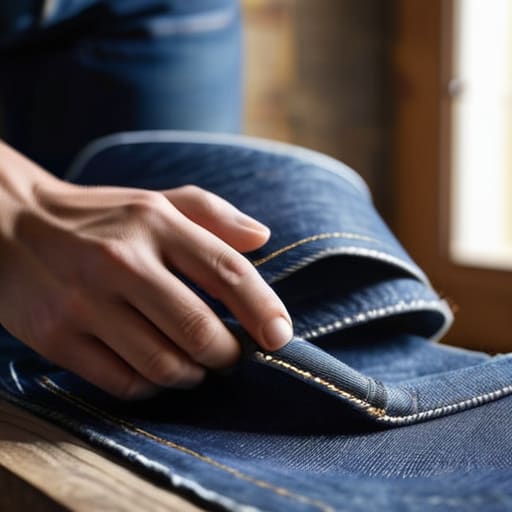
Most people approach tapering like they’re trying to turn a bell-bottom into a cigarette pant by just pulling a string tight at the ankle, and that is how you end up with legs that look like two mismatched straws. When you’re tapering pants legs, the goal isn’t just to make them narrower; it’s to preserve the intended line of the original design. If you’re working with a heavy denim or a structured twill, you have to respect the grainline. If you take too much out of the side seam without considering the taper toward the hem, you’ll end up with a weird, twisted silhouette that makes your stride look completely off.
The secret to successful clothing resizing techniques is knowing where to start the pinch. Don’t just hack at the side seam from top to bottom. You need to taper from the mid-thigh down to the ankle to maintain the structural integrity of the hip. If the fabric is a delicate viscose or a lightweight linen, watch your seam allowance closely; you don’t have much room for error before the garment loses its shape entirely. It’s about subtraction, not just shrinking.
Precision Over Panic How to Take in Waistline Measurements
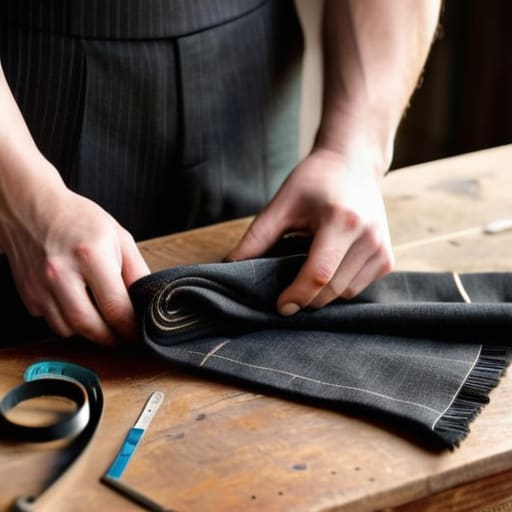
Look, the waist is where most people lose their minds. You’ll see a pair of trousers that fits perfectly everywhere else, but the moment you sit down, it’s like a tourniquet. Most people think the solution is to just buy a size up and live with the extra fabric pooling at the hips, but that’s a waste of money. When you’re adjusting clothing fit at the waist, you have to stop thinking about the number on the tag and start thinking about the actual anatomy of your hips and where your ribcage ends.
The biggest mistake I see in DIY sewing garment alterations is the “pinch and pray” method. You pinch the excess fabric at the back, pin it, and hope it looks even. It never does. To do this properly, you need to measure the circumference of the garment while it’s lying flat, then compare it to your actual waist measurement—but give yourself a breathing buffer. If you’re learning how to take in a waistline, always aim to take it from the center back seam or the side seams, never just one side, or you’ll end up with a garment that pulls diagonally and looks completely lopsided.
Smart Clothing Resizing Techniques for a Wednesday Ready Wardrobe
The goal isn’t to look like you’re wearing a costume; it’s to look like the clothes actually belong to you. When we talk about clothing resizing techniques, most people think they have to commit to a massive overhaul, but the most effective changes are often the smallest ones. If a shirt feels “fine” but lacks structure, it’s usually because the shoulder seams are drifting too far down the arm. Instead of tossing it, look at the armholes. A slight adjustment there can change the entire drape of the fabric, making a cheap cotton tee look like something you actually curated.
For a wardrobe that survives a standard Wednesday, you need to prioritize structural integrity over sheer aesthetics. This means knowing when to use sewing garment alterations to fix a silhouette and when to leave it alone. If you’re working with a heavy wool blazer, don’t just pull at the waist; you need to respect the canvas inside. If you’re tackling lighter fabrics, focus on the tension of the seams. The smartest way to resize is to work with the grain of the fabric, ensuring that every adjustment feels intentional rather than like a desperate attempt to hide a bad fit.
The Tailor’s Cheat Sheet: 5 Rules for Not Ruining Your Clothes
- Check the seam allowance before you commit. If you’re trying to take in a vintage pair of trousers but there’s only 5mm of fabric inside that seam, you’re not tapering; you’re just destroying them. Always flip the garment inside out first to see how much “life” is actually left in that seam.
- Don’t fight the grainline. When you’re tapering a leg or a sleeve, if you pull the fabric too far off-center to make it fit your specific body shape, the garment will twist around your limb like a spiral staircase. Keep your new seam parallel to the original, or you’ll be walking in circles.
- Pinning is a lie; use basting instead. Pins are great for a quick visual, but they don’t account for how fabric drapes when you actually move. If you’re doing a significant take-in, run a long, loose basting stitch first. It lets you see how the new shape behaves in real life before you commit to the permanent machine stitch.
- Respect the weight of the fabric. You cannot taper a heavy, structured wool coat the same way you taper a jersey T-shirt. Heavy fabrics need more “breathing room” in the seam to avoid looking bulky and stiff, while lightweight fabrics will show every single uneven stitch if you aren’t careful.
- The “Sit Test” is non-negotiable. I don’t care if the garment looks like a dream while you’re standing perfectly still in front of a mirror. Sit down, reach for your phone, and walk around the room. If the new, tapered seam pulls or digs into your skin the moment you move, you’ve taken it in too far.
The Real Cost of a Silhouette
“Stop looking at a garment that’s too wide as a failure of your body; it’s just a math problem waiting for a seamstress. Tapering isn’t about shrinking yourself into a trend, it’s about reclaiming the architecture of the piece so you aren’t drowning in excess fabric every time you step out for a Tuesday coffee.”
Neve Okonkwo-Barr
The Bottom Line on Fit
At the end of the day, whether you are tackling a side seam on a heavy linen shirt or trying to taper the leg of a pair of trousers without making them look like cheap fast-fashion leggings, the principle remains the same: respect the original construction. We’ve covered how to navigate waistline measurements, how to preserve a silhouette while narrowing a leg, and why the math of an alteration almost always beats the cost of a replacement. It isn’t about being perfect on your first stitch; it is about understanding that style is a technical skill, not a credit card limit. If you can master the geometry of your own body and the physics of your fabric, you stop being a victim of “standard sizing” and start being the architect of your own closet.
Stop waiting for the “perfect” piece to land in your lap or appear in a window display. That piece doesn’t exist, because the perfect piece is actually the one you already own that just needs a little bit of intentional adjustment. When you stop viewing your wardrobe as a collection of static objects and start seeing it as a series of fixable shapes, everything changes. You aren’t just mending clothes; you are reclaiming your time and your money from a system that profits off your insecurity. Build a wardrobe that actually works for your life on a Tuesday, a Wednesday, or a chaotic Friday—one stitch at a time.
Frequently Asked Questions
If I taper the legs of my trousers too much, am I going to ruin the way the fabric drapes or make them look like cheap leggings?
Yes, you absolutely can. If you take in the leg too aggressively, you lose the “ease”—that little bit of extra fabric that allows the material to move and breathe. Without it, the fabric just clings to your skin, which is exactly how you end up with trousers that look like cheap, shiny leggings. Always leave enough room for the fabric to drape; if you’re fighting the silhouette, you’ve gone too far.
How much should I actually be budgeting for a professional to take in the waist of a heavy wool blazer compared to a light cotton shirt?
Don’t let a “cheap” price tag fool you into thinking all tailoring is equal. For a light cotton shirt, you’re looking at maybe £15–£25 to take in the waist—it’s a quick job. But a heavy wool blazer? That’s a different beast. You’re paying for the structural integrity. Budget £40–£60 minimum. You’re paying for the time it takes to navigate thick seams and ensure the vent doesn’t pull weirdly. It’s the math of the fabric.
Is there a point where a garment is "too far gone" to be taken in, or can I honestly fix almost anything if I'm willing to pay for the labor?
Look, I’ll be honest: there is a line. If you’re trying to take in a jacket by three sizes, you’ll end up with armholes that sit in your armpits and a back that looks like a crumpled paper bag. You can fix a lot with labor, but you can’t fix bad geometry. If the structural integrity—the shoulders or the rise—is totally wrong for your frame, save your money. That’s not an investment; it’s a donation.
